
Exercise machines are a common choice for getting stronger after 60. But despite their benefits, they have several important limitations that often go overlooked. Here are four reasons why relying too heavily on exercise machines could be holding back your results.
Recently, I've met with several women who told me they're considering machine-based workouts to help improve their bone and muscle strength. In fact, many of the women I first meet share that one of their primary goals is to strengthen their bones, muscles, or both. Some have been diagnosed with osteopenia or osteoporosis and have been told they should start strength training to help improve their bone health.
Here in the South Hills, there are at least two fitness franchises offering machine-based workouts designed to help improve bone and muscle strength. The good news is that exercise machines can absolutely help strengthen your muscles and bones. The not-so-good news is that they also have four important limitations that often get overlooked.
For some women, these limitations aren't a major concern, and they choose to do machine-based workouts, which is great! But for others, these shortcomings are a much bigger downside, and they prefer a different approach.
Either way, I want to break down four ways exercise machines can limit your results after 60, so you can decide for yourself which approach might be best for you. There's no right or wrong choice. It simply comes down to your goals and what's most important to you.
1. Machines Isolate Muscles Instead of Training Your Whole Body
Exercise machines typically focus on just one or two areas of your body. In most gyms, you'll notice labels on machines that identify the muscles they target, such as biceps, calves, or shoulders. Machines are great at isolating individual muscle groups if that's your goal. For a male bodybuilder, this can actually be one of the best approaches since the primary goal is to develop larger muscles.
The problem is that most women over 60 need whole-body strength. Everyday life requires your entire body to be strong and your muscles to work together. For example, if you need to pick up a heavy box or object off the floor, you'll need strength in your legs, glutes, core, and arms. All of these muscles need to work together to make the activity easier and safer.
This is just one example. I could have also used playing pickleball, traveling, gardening, or countless other activities that require whole-body strength. While machines can certainly strengthen your muscles and bones, they also limit you to the movements those machines are designed to perform.
In everyday life, we don't use individual muscles in isolation. We use multiple muscle groups working together to lift, carry, push, pull, and move our bodies. If your goal is to develop whole-body strength, relying exclusively on exercise machines can leave some important abilities underdeveloped.
A better approach is to include standing exercises that challenge several muscle groups at the same time. In fitness, we call these compound exercises, and they more closely resemble how your body actually moves throughout the day.
2. Machines Don't Challenge Your Balance
After 60, balance exercises need to become a priority. Having the ability to balance on one leg, for example, can help reduce your risk of falling. Better balance also makes everyday activities like gardening, keeping up with grandchildren, playing pickleball, and countless other activities easier and more enjoyable.
The problem with exercise machines is that they don't do much to challenge your balance. When you're sitting or lying on a machine, your body doesn't have to work to maintain its balance the way it does when you're standing.
To improve your balance while standing and moving, you need to practice exercises that challenge those abilities. Some exercises involve standing on one leg, while others involve walking on uneven surfaces or shifting your weight from one leg to another. These activities challenge your body to maintain control while you're moving.
If improving your balance is one of your goals after 60, relying on exercise machines will leave out an important part of your workout. You need exercises that actually challenge your ability to balance, not machines that do the balancing for you.
3. Machines Put You Back in a Seated Position
You've probably heard the expression, "Sitting is the new smoking." While I'm not sure sitting is quite that hazardous to your health, I do know that most of us spend far too much time sitting here in the United States. We sit to eat, drive, watch movies, and do countless other activities. It's simply part of our society and difficult to avoid.
That said, I believe we should limit unnecessary sitting whenever possible. By all means, go to the movies, enjoy lunch with a friend, or relax while watching your favorite show. There's nothing wrong with enjoying those activities. But it's also important to recognize how much of our day we already spend sitting.
Spending long periods in a seated position can contribute to the stiffness and tightness many women experience, especially in their hips and legs. The more time we spend sitting and the less we move our bodies through different positions, the harder some everyday activities can begin to feel.
The last thing most of us need is more sitting, especially during the time we've set aside to exercise. Yet that's exactly what happens when much of your workout involves moving from one seated exercise machine to another.
A good workout after 60 should help counteract some of the effects of spending too much time sitting. Standing, bending, reaching, squatting, and moving your body through different positions can help you maintain the strength and flexibility needed for everyday life. Rather than spending more time in a chair, your workout should give your body opportunities to move in ways it doesn't get to throughout much of the day.
4. Machines Limit How Much Your Core Muscles Work
Your core plays a major role in your physical health after 60. Strong core muscles help support your back, maintain good posture, and make everyday activities easier to perform. When your core is weak, it can become harder to maintain good body positioning and control during activities that involve bending, lifting, carrying, or reaching.
When you sit or lie on an exercise machine, the machine provides much of the support and stability for your body. This means your core muscles don't have to work nearly as hard to keep you balanced and in control. While this may seem convenient at first, it also means you're missing opportunities to strengthen muscles that play an important role in everyday movement.
Ideally, your exercises should challenge your core along with the larger muscles in your legs, back, shoulders, and arms. The days of relying on just one or two abdominal exercises to strengthen your core should be behind us. After 60, we need to pay closer attention to these muscles and find ways to involve them in as many exercises as possible.
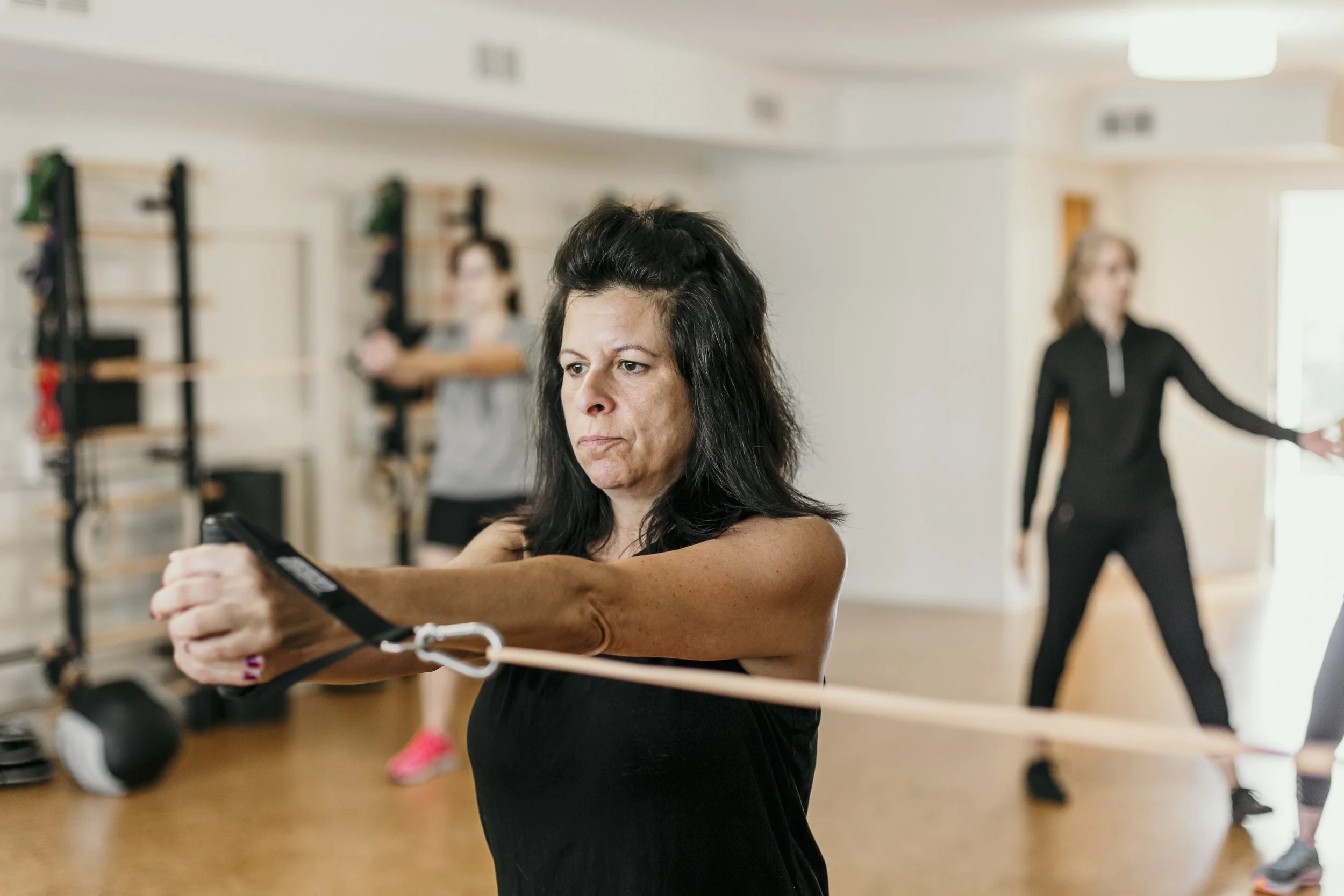
Some of our favorite ways to incorporate core work at A50 are through kettlebell and resistance band exercises. These exercises may primarily target your legs, back, or shoulders, but they can also challenge your core muscles as you work to maintain good posture, balance, and control. It's a great way to strengthen multiple areas of your body during the same exercise.
Exercise machines can certainly help you get stronger, but as we've covered, they also have limitations that are worth considering. If your goal is to improve your strength, balance, flexibility, and ability to stay active in everyday life, a more complete, full-body approach to exercise may be a better option.
Ultimately, the best approach comes down to your individual goals and what's most important to you. If you'd like to learn more about getting started, I recommend reading our article, How Long Does It Take to Get in Shape After 60?, which explains how long you can expect to exercise before seeing results and how to make progress safely.
And if you live in Mt. Lebanon, Upper St. Clair, Peters Township, or the surrounding South Hills and would like us to guide you step by step through getting stronger and more fit after 60, we'd love to help. You can apply for a free week of personal training to see whether A50 is the right fit for you.
ABOUT THE AUTHOR
Jason Zawodniak is the Co-founder of A50 Personal Training, the first personal training studio in the South Hills built exclusively to serve women over 50. With nearly two decades of experience in the fitness industry, Jason noticed early in his career that women over 50 were consistently underserved — showing up to gyms where they felt out of place, unsure of what to do, and afraid of getting hurt. After hearing those same stories from his own clients year after year, he made a decision: in 2017, he opened A50 to create the program he knew this demographic deserved. Today, Jason specializes in helping women over 50 build the strength and flexibility they need to stay active, prevent injury, and keep up with the people and activities they love most.