
How Long Should a Workout Be to Get Results After 60?
Do you really need to exercise for an hour to get results after 60? Not necessarily. Here's what you should know about workout length and what matters most when you're just getting started.
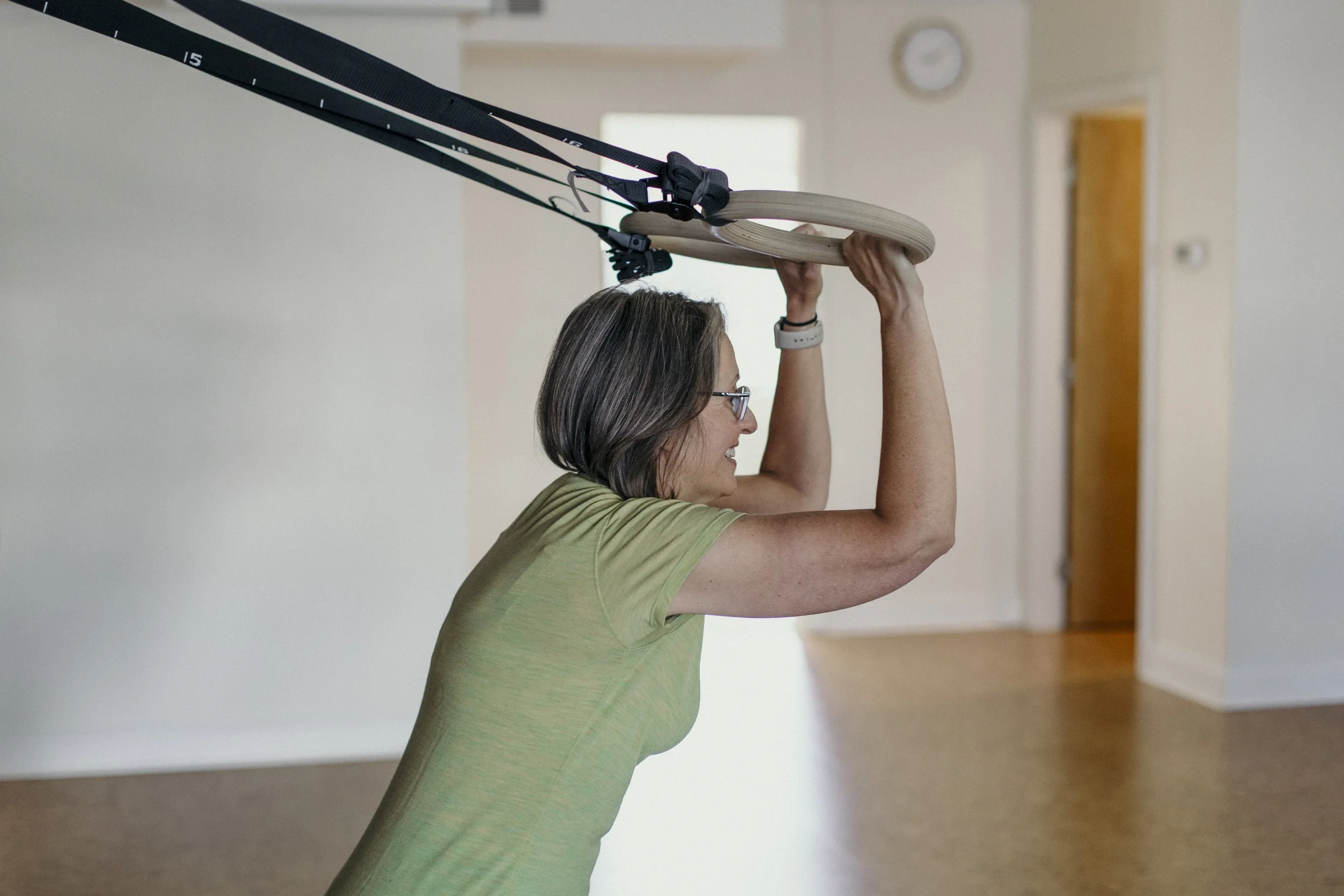
A question many women over 60 wonder about is, "How long should my workout be?" It's something I talk about with my clients often because it's an important question that deserves a clear answer. How much time you spend exercising matters, especially after 60. Do too much, and you may increase your risk of injury. Do too little, and you may not get the results you're looking for.
I also want to be clear about who this article is for. I'm writing for women over 60 who are just getting started with exercise or getting back into it after some time away. Although we work with women over 50, most of our clients are in their 60s and 70s. I've noticed that women in this age group are often underserved when it comes to fitness, at least here in the South Hills of Pittsburgh, and I want to help bring some clarity to the subject.
In this article, I'll cover the three main areas of exercise that I believe women in their 60s and 70s should focus on: stretching, strength training, and cardio. All three play an important role in helping you feel your best after 60. I'll explain how much time to spend on each so you can exercise safely and get the results you're looking for.
How much stretching do you need?
Stretching plays a key role in how well we age. Stretching helps your muscles and joints move well so you can feel more flexible. After 60, it's even more important since stiffness can make you more prone to aches, pains, and injuries.
What's great about stretching is that you don't actually need a long yoga class or someone manually stretching you to get great results. I've found that starting with as little as 5 minutes a day of stretching can be a great place to get started.
But what areas should you stretch? While this can vary a bit from person to person, I've found that my clients who stretch their shoulders, hips, and ankles often notice results in a fairly short period of time. The reason is that your shoulders, hips, and ankles do a lot of work. You use these three major joints throughout the day, so starting with these areas makes the most sense for many of my newer clients.
Sure, you can stretch longer than just 5 minutes, but the initial goal is to build a new exercise habit, and habits often start small. By no means am I saying you shouldn't stretch other areas, but I've found that the three key areas to focus on when you're just getting back into fitness are your shoulders, hips, and ankles.
How much strength training do you need?
Strength training is arguably one of the greatest things you can do for your body after 60. And I don't think many people would argue with that. The data shows that strength training can do wonders for your body after 60.
When most people think of strength training, they think about building stronger muscles. And that's true. Strength training can do amazing things for your muscles. You'll feel stronger and more capable of doing the things you love as your muscles get stronger.
But let's not stop there. Strength training also does wonders for your joints and bones. Your joints love resistance training. It's almost like oiling your joints every time you work out. They can feel more limber and mobile after a strength training routine. Your bones can also become stronger and more resilient, which is one of the most important benefits of strength training after 60, especially since fractures become more common as we age when our bones aren't strong.
I just met a new client last week at my personal training studio who said, "I have osteoporosis, I need to do strength training." And she's correct. Strength training is one of the key factors in improving bone health. However, when a client has osteoporosis, we have to pay extra close attention to which exercises we recommend. The appropriate exercises can vary depending on where the osteoporosis is present.
For someone just getting started, I recommend beginning with just one strength exercise every other day if they're doing it on their own. Why just one? The reason is that strength training needs to be done with proper form, and if you're doing it on your own, it's best to start small and build up to ensure your joints and body feel good.
This one strength exercise may take you just 5 to 7 minutes every other day when you're first getting started. Again, the goal is to build a lasting exercise habit.
For someone working with an experienced personal trainer, they should be able to safely complete 3 to 5 exercises in about 20 to 30 minutes. When you're under the close watch of a trained professional, you can often do more while still exercising safely.
How much cardio do you need?
What's great about cardio is that it's often the easiest of the three to do on your own. It's very common for someone to need professional guidance when it comes to strength training, but many people can start doing cardio with little to no support.
The options for cardio are almost endless. You can walk, ride a bike, swim, or use one of the many cardio machines available. If you're looking for equipment to use at home, local South Hills stores like Dick's Sporting Goods at South Hills Village and G&G Fitness Equipment in McMurray have plenty of options. Both places offer more cardio equipment choices than most people will ever need.
My recommendation is to choose the cardio you enjoy most. They all work. My only warning is to make sure whatever cardio you choose is low impact. I don't recommend large group, high-impact cardio workouts for most women over 60. The risk of injury isn't worth it. There are tons of low-impact cardio options that can be very effective, too.
If you're not currently doing cardio workouts, start with 10 minutes a day. I've found this to be a great starting point for my newer clients who are just getting into daily cardio.
A concern I'll hear from women living in the South Hills of Pittsburgh is, "It's too cold or too hot to walk outside." For those living in our area, this is a very real obstacle. We experience both extremes throughout the year.
Personally, I'll go to one of our local South Hills malls for a brisk walk. South Hills Village Mall and the Galleria of Mt. Lebanon are both fantastic choices when the weather is too cold or too hot.
The duration of your cardio can vary greatly. I have clients who have built up to an hour of walking or some other form of cardio. But I don't recommend starting with that duration for most women who are just getting back into fitness.
Start small, then build up
If you're exercising on your own, I'll remind you to start small. After 60, the #1 priority is safety. An exercise-related injury is the last thing you need, and doing the wrong exercises or exercising for too long can increase your risk of getting hurt.
Your body needs time to adjust to exercise. When you start small and gradually build up, you give your body time to become stronger and more fit while reducing your risk of injury.
If you decide to work with a personal trainer, the length of your workouts and the number of exercises you start with should be based on your initial assessment with the trainer.
Regardless of what you choose, the goal is to do something.
You may also find my article, Is It Better to Exercise at Home or Join a Gym After 60?, helpful. It can help you decide which option is the best fit for you at this stage of life.
ABOUT THE AUTHOR
Jason Zawodniak is the Co-founder of A50 Personal Training, the first personal training studio in the South Hills built exclusively to serve women over 50. With nearly two decades of experience in the fitness industry, Jason noticed early in his career that women over 50 were consistently underserved — showing up to gyms where they felt out of place, unsure of what to do, and afraid of getting hurt. After hearing those same stories from his own clients year after year, he made a decision: in 2017, he opened A50 to create the program he knew this demographic deserved. Today, Jason specializes in helping women over 50 build the strength and flexibility they need to stay active, prevent injury, and keep up with the people and activities they love most.