
Why Traditional Gyms Don’t Work for Women Over 50
If you’ve ever walked into a gym and thought, “I have no idea what I’m supposed to do,” you’re not alone. Many women over 50 feel this way — and it doesn’t mean exercise isn’t for you. It may simply mean you need a different approach.
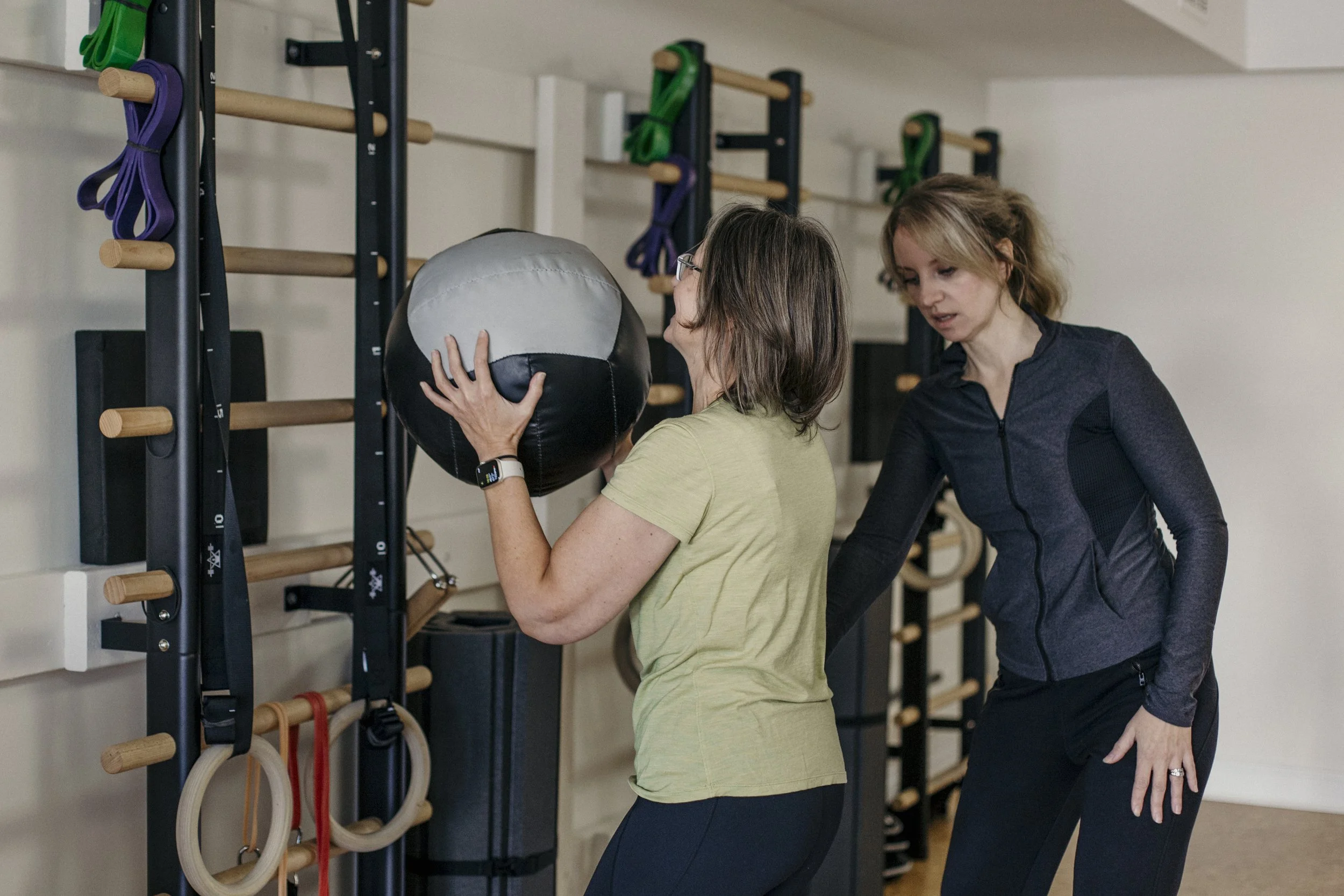
If you’ve ever walked into a gym and thought, “I have no idea what I’m supposed to do,” you’re not alone.
Many women over 50 have had that exact experience.
They walk in wanting to get stronger, feel less stiff, improve their balance, and take better care of themselves. But once they get there, the whole place can feel overwhelming.
Rows of machines.
People who seem to know exactly what they’re doing.
Classes that move too fast.
Exercises that may or may not be right for your body.
And before long, it’s easy to think, “Maybe this just isn’t for me.”
But in many cases, the problem isn’t you.
The problem is that traditional gyms were not built with women over 50 in mind.
That doesn’t mean you’re old. It doesn’t mean you need a watered-down program. And it definitely doesn’t mean you can’t get stronger.
It simply means your body, your goals, and your concerns may be different than they were 20 or 30 years ago.
Maybe your hips, back, or shoulders feel stiffer than they used to. Maybe you’ve had an injury or surgery. Maybe you’re worried about doing the wrong exercise and making something worse.
Or maybe you just want to feel better in real life — walking up stairs, traveling, carrying groceries, getting off the floor, keeping up with family, and feeling more capable in your body again.
That takes more than access to equipment.
It takes direction, accountability, assessment, and the right environment.
1. Traditional gyms leave you without enough direction
One of the biggest problems with traditional gyms is that they give you access, but not always guidance.
You can use the machines. You can walk on the treadmill. You can pick up the weights.
But the real question is, what should you actually do?
That’s where many women over 50 get stuck.
You may find yourself wondering which exercises are right for you, how much weight to use, whether your form is correct, or whether something you feel during an exercise is normal.
Those are not small questions.
They matter.
After 50, your exercise program should not be random. Your body may need more attention to stiffness, balance, posture, joint mobility, strength, and past injuries.
That does not mean you need to be treated like you’re fragile. It simply means you need a plan that makes sense for your body.
A good workout should help you build strength and flexibility in a way that supports real life. Not just getting through a list of exercises, but feeling stronger when you climb stairs, more confident when you travel, and more capable doing the things you enjoy.
What to look for instead
After 50, direction matters.
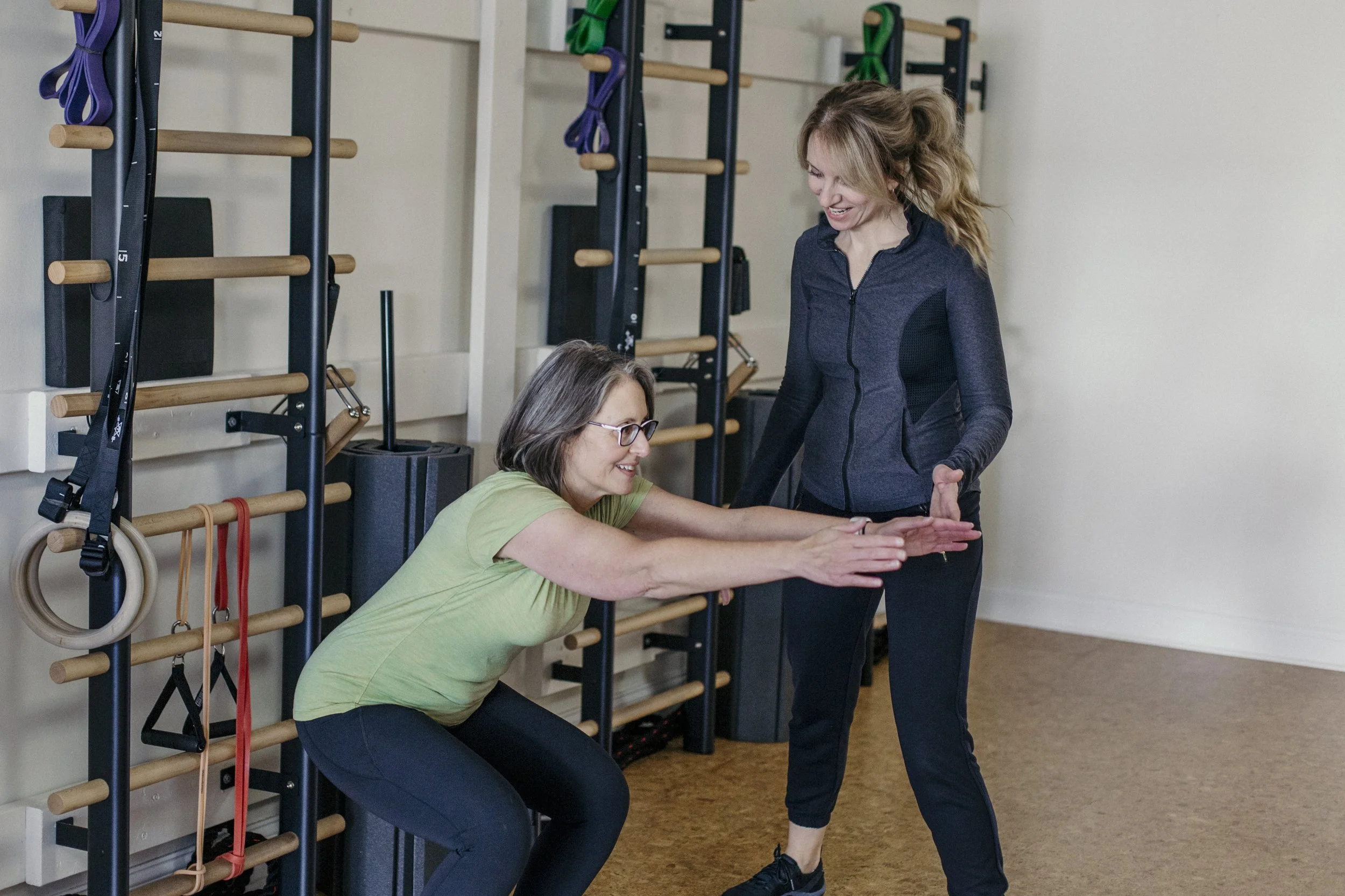
You want someone who can help you choose the right exercises for your body and then show you how to do them correctly.
A good coach should be able to explain why you’re doing an exercise, how it helps, what proper form looks like, and how to adjust it if something doesn’t feel right.
The workout should feel appropriately challenging based on your body, goals, and starting point. It should not feel excessively hard on the joints, and it should not feel overly simplified either.
A good workout should leave you feeling more confident — not confused, uncertain, or worried that you did the wrong thing.
And in many cases, a good workout should give you more energy, not leave you feeling completely drained afterward.
That kind of guidance changes everything.
Because the goal is not to do random exercises.
The goal is to do the right exercises for your body, your goals, and your starting point.
2. Traditional gyms lack real accountability
Most people join a gym with good intentions.
They’re motivated at first. They go a few times. Maybe they even stay consistent for a month or two.
Then life gets busy.
A trip comes up. Family needs help. An ache or pain makes them nervous. One week gets missed, then another.
Eventually, they stop going.
And what does the gym usually do?
Nothing.
As long as the membership keeps getting paid, most gyms don’t notice whether you show up or not.
That can feel discouraging because deep down, people want to feel like they matter. Especially when they’re trying to improve their health.
Many women over 50 have spent years taking care of everyone else. Children, grandchildren, spouses, parents, friends.
But when it comes to your own strength, flexibility, and health, it helps to have someone looking out for you too.
Not in a pushy way.
In an encouraging way.
Someone who knows your name. Someone who notices when you’re not there. Someone who remembers what you’re working on. Someone who helps you keep going during the weeks when motivation is lower.
That kind of support matters more than most people realize.
What to look for instead
Look for a program where accountability is built in.
That does not mean you need someone yelling at you. Most women over 50 do not want that, and they do not need it.
What works better is steady encouragement.
A coach who says, “We missed you last week.”
Or, “How did your knee feel after that exercise?”
Or, “Let’s adjust this today.”
Or, “That looked stronger than last time.”
Those little moments build trust. They also make it easier to stay consistent.
And consistency is where results come from.
Not from one perfect workout. Not from pushing too hard. But from showing up regularly, doing exercises that are right for your body, and slowly getting stronger over time.
3. Traditional gyms skip the assessment
One of the most important parts of a good exercise program is knowing where you’re starting.
Before someone tells you what exercises to do, they should understand your body.
That includes your strength, flexibility, balance, endurance, past injuries, current limitations, goals, and confidence level.
Without that information, exercise becomes a guessing game.
And guessing is one of the biggest reasons women over 50 end up frustrated.
You may choose exercises that are too hard, too easy, or simply not right for your body. This is one reason many women end up discouraged or doing exercises that don’t help them feel better.
Here in the South Hills, one new client named Kathy recently came to A50 after realizing that traditional gyms and local boot camps simply were not the right fit for her body.
She told us she had arthritis throughout her body and exercises like push ups on the floor or carrying heavy weights were putting far too much strain on her hands and joints.
After assessing her movement, we confirmed she was absolutely right.
The last thing her body needed was repeated pressure through painful wrists and hands during traditional push ups.
So instead of forcing exercises that irritated her joints, we recommended safer push up alternatives that allowed her hands and wrists to stay in a much better position.
Almost immediately, she felt more comfortable and more confident.
That’s why assessment matters.
Because the “best” exercise is not always the best exercise for your body.
For example, if your hips are stiff, your squat may need to look different.
If your shoulders don’t move well, lifting weights overhead may not be the best place to start.
If your balance feels off, certain exercises may need more support.
If you’ve had a knee, hip, shoulder, or back issue, your plan should take that into account.
That’s not making fitness complicated.
That’s making it safer and more effective.
What to look for instead
Before joining a gym or working with a trainer, ask what kind of assessment they perform.
A thoughtful assessment should help you understand your strength, flexibility, balance, limitations, and goals before jumping into exercise.
It should not feel like a sales pitch in disguise.
It should feel helpful.
You should leave with more clarity about your body, not more confusion.
A good assessment helps answer important questions:
Where am I starting?
What do I need to work on?
Which exercises make sense for me?
Which exercises should I avoid for now?
How can I build strength safely?
This is especially important after 50 because the goal is not just to exercise. The goal is to exercise in a way that helps your everyday life.
Getting stronger should help you carry groceries with more confidence.
Improving flexibility should help you move with less stiffness.
Better balance should help you feel more steady walking, traveling, or stepping off a curb.
That starts with knowing where you are today.
4. Traditional gyms lack the right community
Have you ever walked into a gym or fitness class and thought, “These people aren’t like me”?
That feeling matters.
The environment you train in can either encourage you or make you want to leave.
Many traditional gyms and large fitness classes are filled with people in a very different season of life. That does not make them bad. It just means the environment may not feel right for you.
A woman in her 50s, 60s, or 70s often has very different goals than someone in her 20s or 30s.
She may not care about lifting the heaviest weight in the room. She may not want loud music, fast-paced classes, or exercises that feel risky.
She may simply want to feel stronger, more flexible, more confident, and more like herself again.
That is a very different goal.
And it deserves a different environment.
When you feel out of place, it is harder to stay consistent. You may start comparing yourself. You may feel embarrassed asking questions. You may push through exercises that don’t feel right because you don’t want to stand out.
That is not a great setup for long-term success.
What to look for instead
Look for an environment where you feel comfortable.
A place where the people around you are in a similar season of life. Where you don’t feel like you have to compete. Where asking questions feels normal. Where the exercises are challenging, but not intimidating.
That kind of community can be incredibly encouraging.
When you train around women who understand what you’re working toward, it becomes easier to believe change is possible.
You see someone else getting stronger after 50.
You see someone else improving her balance.
You see someone else moving with more confidence.
You hear stories from women who started where you are now.
Sometimes the thing you need most is not another machine.
It’s the reminder that you are not alone.
What women over 50 need instead
If traditional gyms haven’t worked for you, it does not mean exercise won’t work.
It may simply mean you need a different approach.
A better approach after 50 usually includes a clear plan, personalized exercises, proper form, strength training, flexibility work, balance training, encouragement, accountability, and a comfortable environment.
You do not need to train like a 25-year-old.
You do not need high-impact workouts.
You do not need to figure everything out on your own.
And you do not need to feel embarrassed because traditional gyms never felt right.
Many women over 50 assume feeling stiff, weak, or less capable is simply part of aging.
But in many cases, the body responds remarkably well to the right kind of exercise and guidance.
Your body can still get stronger. Your flexibility can improve. Your balance can get better. Your confidence can come back.
But the approach matters.
The right exercise program should help you feel more capable in real life. It should help you climb stairs with more confidence, travel with less stiffness, keep up with family, carry groceries without feeling as weak, and enjoy your days with more energy.
That is what exercise after 50 should be about.
Not punishment.
Not confusion.
Not trying to keep up with people who have completely different goals.
The right program should help you feel better in your own body.
A better next step
If you’ve tried traditional gyms before and never felt like they were the right fit, there is nothing wrong with you.
You may simply need more guidance, more personalization, and a place that understands what exercise after 50 should actually look like.
At A50 Personal Training, we help South Hills women over 50 get stronger and more flexible so they can stay active, avoid injury, and keep up with family.
Our studio is built specifically for women over 50 who want personal guidance without the pressure, confusion, or intimidation of a traditional gym.
If you live in the South Hills and want help finding the safest and most effective exercises for your body, you can apply for a free 1-week personal training trial.
You’ll get personalized coaching, support, and a chance to see if A50 is a good fit for you.
You may also enjoy reading:
How to Start Strength Training After 60 Without Getting Hurt
ABOUT THE AUTHOR
Jason Zawodniak is the Co-founder of A50 Personal Training, the first personal training studio in the South Hills built exclusively to serve women over 50. With nearly two decades of experience in the fitness industry, Jason noticed early in his career that women over 50 were consistently underserved — showing up to gyms where they felt out of place, unsure of what to do, and afraid of getting hurt. After hearing those same stories from his own clients year after year, he made a decision: in 2017, he opened A50 to create the program he knew this demographic deserved. Today, Jason specializes in helping women over 50 build the strength and flexibility they need to stay active, prevent injury, and keep up with the people and activities they love most.