
3 Strength Tests That Reveal Your Strength After 50
These three simple strength tests can give you a better idea of how your strength compares in the ways that matter most. They focus on everyday movements that can help you stay active, help prevent injuries, and continue doing the things you enjoy after 50.
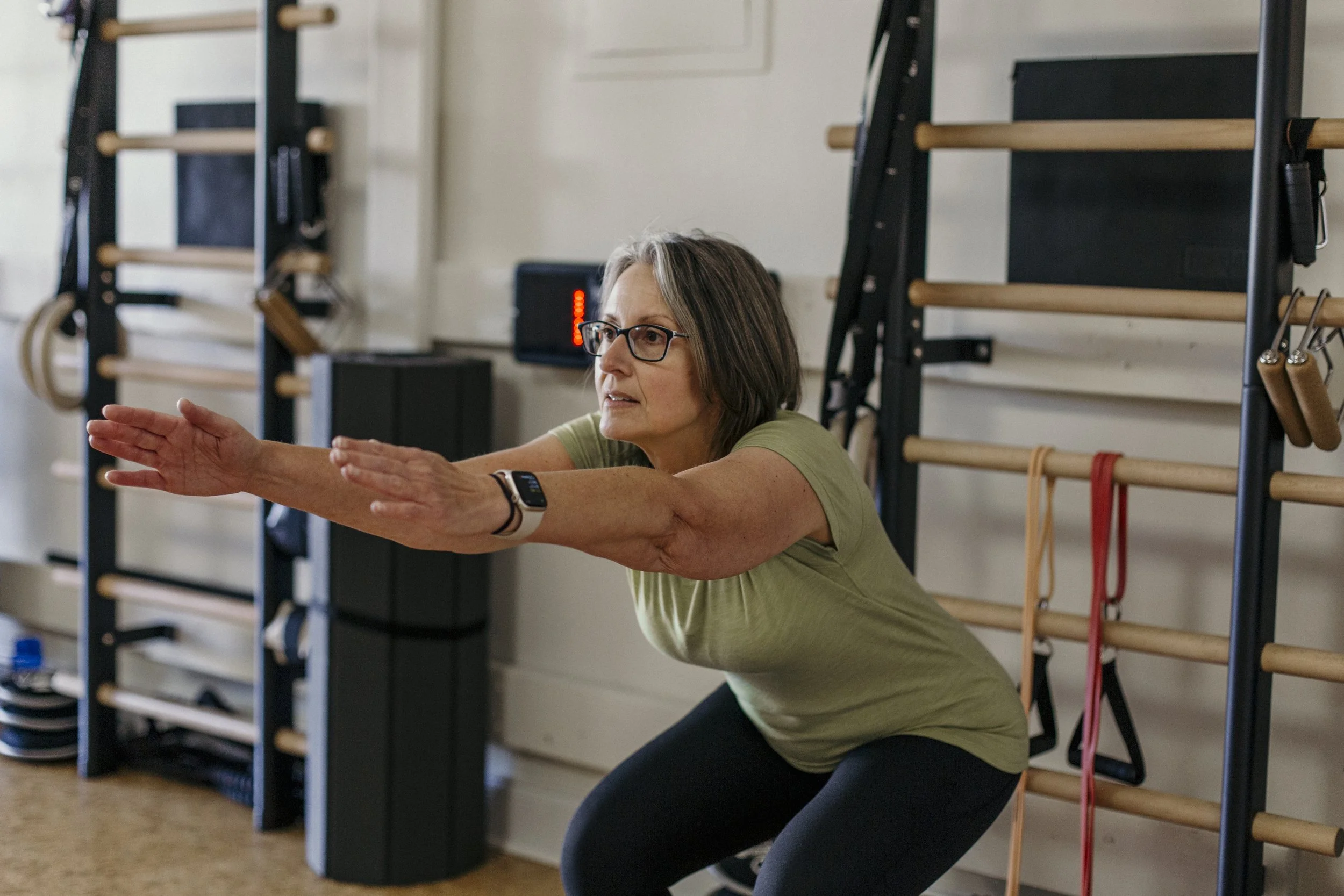
At some point after 50, many women begin noticing small changes they didn't expect.
For some, it's stiffness that seems to linger longer than it used to. For others, it's weakness in their legs, difficulty lifting everyday objects, or feeling less steady and capable than they once did.
Because these changes often happen gradually, it can be hard to know whether your strength is actually changing—or if you're simply having an "off" day.
The good news is that you don't need a gym membership or expensive equipment to get a better idea of where you stand.
A few simple strength tests can provide valuable insight into the kind of strength that matters most: the strength you rely on every day to stay active, help prevent injuries, and continue doing the things you enjoy.
In this article, we'll walk through three simple strength tests you can try at home. They aren't about comparing yourself to anyone else. They're simply a practical way to better understand your current strength and whether it may be time to start building more of it.
Test #1: The Ground to Stand Test
If you've ever watched a young child play, you've probably noticed they get on and off the floor dozens of times without thinking about it.
Then, somewhere along the way, many of us stop.
We spend more time sitting in chairs, relaxing on the couch, and sleeping in beds. Before long, getting up from the floor becomes something we rarely do. Like any movement we stop practicing, it gradually becomes more difficult.
That's why The Ground to Stand Test is one of my favorite ways to get a quick picture of someone's lower-body strength and mobility.
How to do the test
Lie on your back on a comfortable surface such as carpet or an exercise mat.
When you're ready, stand up using whatever method feels most natural.
Once you're standing, think about how it felt.
Was it smooth?
Did you need to pause several times?
Did you rely heavily on your hands?
Did you feel stiff or unsteady getting your feet underneath you?
Those are all signs your lower-body strength and mobility may not be where you'd like them to be.
What's the goal?
Eventually, the goal is to stand up from the floor without using your hands.
That doesn't mean everyone should expect to do that today. Think of it as something to work toward over time rather than something you need to accomplish on your first attempt.
Why this matters
Being able to get on and off the floor affects much more than exercise.
It can make playing with grandchildren easier, gardening more enjoyable, and give you confidence that if you ever need to get down—or accidentally end up there—you have a much better chance of getting back up on your own.
One exercise that can help
Ironically, one of the best ways to improve this movement is to practice it.
A newer client recently asked me,
"How do I get better at getting on and off the floor?"
I told her she probably wasn't going to like my answer.
You get better by practicing getting on and off the floor.
As children, we did this every day without thinking about it. Our muscles, joints, and nervous system learned exactly how to coordinate the movement.
As adults, we often stop doing it altogether.
Practicing this movement a few times each week reminds your body that getting on and off the floor is still something it should be able to do. Over time, you'll often notice improvements in both mobility and strength.
Test #2: The Single-Leg Balance Test
Balance isn't just a nice thing to have after 50.
With every passing decade, it becomes more important.
Falls are one of the leading reasons older adults end up in the emergency room or need physical therapy. While no exercise program can guarantee you'll never trip or fall, improving your balance can make falls far less likely. Better balance can also help you feel more confident walking, climbing stairs, and moving through everyday life.
The good news?
You don't need fancy equipment to see where you stand.
How to do the test
Stand tall with your arms relaxed at your sides.
Lift one foot just a few inches off the floor.
Keep your eyes open and see how long you can comfortably maintain your balance.
Stop the moment you become too wobbly or need to put your foot down.
Repeat the test on both legs.
Many people are surprised to discover one side feels much steadier than the other.
What's the goal?
A good long-term goal is to comfortably balance on each leg for about 40 seconds with your upper body relaxed.
If you can easily hold a conversation while balancing, that's a great sign you're developing good balance.
There are certainly more advanced balance tests, but standing on one foot with your eyes open is an excellent place to begin.
One exercise that can help
One of the best ways to improve your balance is to practice balancing.
Set aside a few minutes where you won't be distracted. Stand near a sturdy countertop or another stable surface you can hold if needed. Practice balancing on one foot for several attempts before switching sides.
Like strength, balance improves with consistent practice. Over time, many people notice they can stand longer and feel much steadier than when they first started.
A real example
Recently, I was assessing a new client and we performed this balance test together.
She was shocked.
She struggled to reach just 10 seconds on one leg.
I smiled and told her she wasn't alone.
We often see new clients start right around that point before gradually building up to 40 seconds.
Whatever your score is today, don't let it discourage you.
Balance, like many other areas of fitness, can improve with the right exercises and consistent practice.
Test #3: The Chair Squat Test
Strong legs make almost every part of daily life easier.
They help you climb stairs, carry groceries, walk through airports, get in and out of the car, and yes, even get on and off the floor.
When leg strength begins to decline, everyday activities often feel harder than they should.
The Chair Squat Test is a simple way to measure functional lower-body strength using nothing more than a sturdy chair.
How to do the test
Place a sturdy kitchen chair against a wall so it won't slide.
Sit down slowly until your hips lightly touch the chair.
Immediately stand back up.
Keep your hands free. They can reach out in front of you for balance, but don't push off your legs or the chair.
Continue performing slow, controlled repetitions until you feel you've reached your comfortable limit.
Stop immediately if you experience joint pain or anything doesn't feel right.
What's the goal?
A good long-term goal is to work toward 30 Chair Squats with ease.
If 30 feels out of reach today, don't worry. Simply focus on improving a little at a time. Once 30 feels easy, you're likely ready to progress to a more challenging exercise.
One exercise that can help
Fortunately, improving this test is straightforward.
Practice Chair Squats.
Start with a number of repetitions you can perform with good control and without discomfort.
As your strength improves, you'll likely notice getting out of chairs, climbing stairs, and many other daily activities begin to feel easier as well.
Where to Go From Here
If one or more of these tests was harder than you expected, don't be discouraged.
For many women, the biggest surprise isn't how difficult the test is—it's realizing that strength, balance, and mobility can improve with the right exercises and consistent practice.
At A50 Personal Training, we help South Hills women over 50 get their strength and flexibility back so they can stay active, help prevent injuries, and continue doing the things they enjoy. Our personal training studio is designed specifically for women who want expert guidance in a welcoming, supportive environment.
If you live in the South Hills and would like to see what that looks like, we invite you to apply for our free one-week personal training trial. It's an opportunity to experience our coaching, ask questions, and discover what's possible for your body.
If you'd like to continue learning first, I also recommend reading The Best Types of Exercise for Building Bone Strength After 50. Building stronger bones and building stronger muscles go hand in hand, making it a great next step after learning where your strength stands.
ABOUT THE AUTHOR
Jason Zawodniak is the Co-founder of A50 Personal Training, the first personal training studio in the South Hills built exclusively to serve women over 50. With nearly two decades of experience in the fitness industry, Jason noticed early in his career that women over 50 were consistently underserved — showing up to gyms where they felt out of place, unsure of what to do, and afraid of getting hurt. After hearing those same stories from his own clients year after year, he made a decision: in 2017, he opened A50 to create the program he knew this demographic deserved. Today, Jason specializes in helping women over 50 build the strength and flexibility they need to stay active, prevent injury, and keep up with the people and activities they love most.