
The Best Types of Exercise for Building Bone Strength After 50
Bone strength becomes more important after 50, but many women are never taught what types of exercise actually help. In this article, we’ll break down four of the best types of exercise for supporting stronger bones after 50 — including beginner-friendly examples, why they work, and how to progress them safely over time.
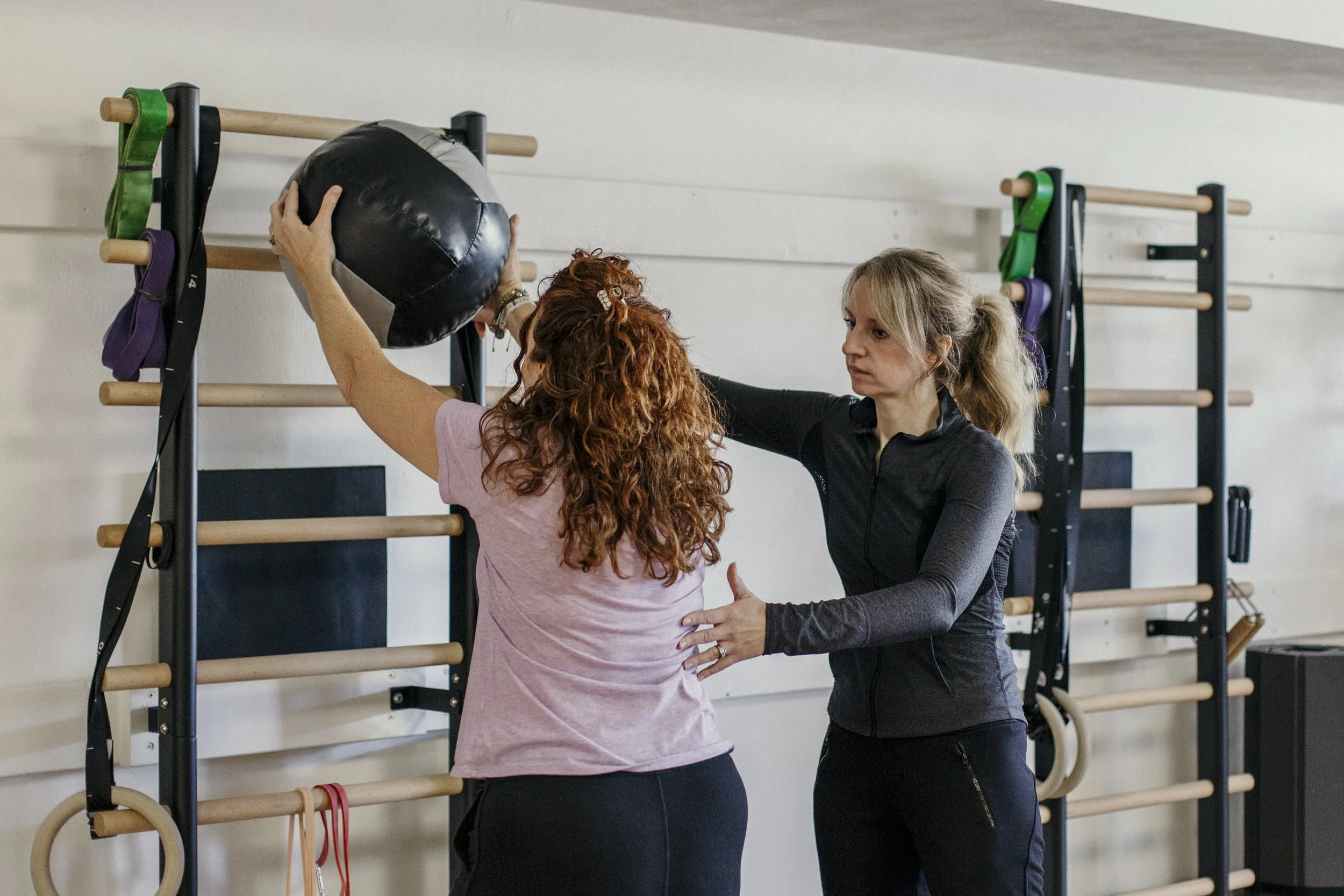
Many women over 50 already know exercise is important.
But what many do not realize is that certain types of exercise are far more helpful for bone strength and bone density than others.
Walking, stretching, and staying active are all great habits. But when it comes to supporting bone density and keeping the body strong long term, the body usually needs more than movement alone.
Bones respond to challenge.
Not extreme challenge. Not punishing workouts.
But the right kind of challenge.
That is why exercises that involve strength, resistance, weight-bearing movement, and controlled impact tend to be the most helpful for maintaining strong bones after 50.
This matters because bone strength affects far more than most women realize.
It can affect balance, confidence, posture, energy, mobility, and the ability to continue doing everyday activities comfortably as the years go on.
Things like:
climbing stairs
carrying groceries
gardening
traveling
keeping up with grandkids
feeling more stable and capable
These are the things most women actually care about.
The good news is this:
You do not need to train like an athlete to help support stronger bones.
You simply need the right exercises, the right progression, and an approach that fits your body.
Here are four of the best types of exercise for building bone strength after 50.
1. Squat exercises
Squats are one of the most useful exercises for women over 50 because they strengthen the lower body in a way that directly carries over to everyday life.
Every time you sit down in a chair and stand back up, you are doing a version of a squat.
That is one reason this movement matters so much.
Squat exercises help strengthen the hips, thighs, glutes, and legs — areas that become especially important for supporting bone strength and stability as we age.
They also help train the body to move more efficiently.
Many women begin relying too heavily on their knees or lower back when getting up from chairs, climbing stairs, or bending down. Squat exercises help teach the body how to use the legs and hips more effectively again.
A great beginner version is the sit-to-stand squat.
Start seated in a sturdy chair with your feet flat on the floor.
Lean forward slightly, press through your feet, and stand up. Then slowly lower yourself back into the chair with control.
At first, it is completely fine to use your hands on the chair or your thighs for assistance.
The goal is not to make the exercise hard immediately.
The goal is to help the body move safely and confidently.
A good starting point may be 5–8 repetitions.
Over time, many women gradually progress toward:
using less assistance from the hands
slowing down the lowering portion
increasing repetitions
using a slightly lower chair
eventually holding a light weight
The key is controlled movement.
A squat should feel steady and safe — not rushed or painful.
Over time, these small progressions can help improve lower-body strength, support the hips and spine, and help the body feel more capable during everyday activities.
2. Stair climbing
Stair climbing is another excellent exercise for supporting bone strength after 50 because it combines strength and weight-bearing movement together.
When you climb stairs, the muscles and bones in the legs and hips have to support your body weight while working against gravity.
That loading effect is one reason stair climbing is so beneficial.
It also trains balance, coordination, and leg strength in a very practical way.
For many women, one of the first places they notice weakness is during activities like:
climbing stairs
walking uphill
getting up from lower surfaces
carrying things while moving
That is why stair-related exercises can be so valuable.
A beginner does not need to start by climbing multiple flights of stairs.
In fact, for some women, that may be too much initially.
A simple and effective starting point is a basic step-up.
Hold onto a railing or stable surface.
Step one foot onto a low step.
Press through the foot to rise up.
Then slowly step back down with control.
Repeat for several repetitions before switching sides.
The focus should remain on balance, control, and smooth movement.
Not speed.
As strength improves, progression may include:
increasing repetitions
using a slightly higher step
reducing reliance on hand support
climbing additional stairs gradually
Like many effective exercises after 50, stair climbing does not need to look intense to be effective.
Consistent, controlled movement is often what helps the most.
3. Resistance training exercises
Resistance training is one of the most important types of exercise for maintaining bone strength and bone density after 50.
This simply means the muscles are working against resistance.
That resistance may come from:
resistance bands
body weight
dumbbells
cables
Many women hear the phrase “strength training” and immediately picture heavy weights or intimidating gym environments.
But resistance training after 50 does not need to look extreme.
In fact, the safest and most effective approach is usually gradual, controlled, and personalized.
Resistance training helps because muscles pull on bones when they contract. That pulling force helps stimulate and support the bones over time.
It also helps improve posture, stability, balance, and overall strength — all of which become increasingly important as we age.
One great beginner exercise is the band row.
Anchor a resistance band around a sturdy object at chest height.
Hold one end in each hand and stand tall.
Then gently pull your elbows backward as if you are trying to squeeze your shoulder blades together.
Slowly return to the starting position.
The movement should feel controlled and smooth.
Many women feel weakness in the upper back and posture muscles as they age, especially from years of sitting, driving, computer work, or simply becoming less active.
Exercises like rows help strengthen those areas again.
Another excellent beginner resistance exercise is an elevated plank.
Instead of performing a full plank on the floor, place your hands on a sturdy counter, bench, or bar.
Step your feet backward until your body forms a straight line.
Then gently brace your stomach and hold the position while breathing normally.
Even holding this position for 10–20 seconds can be a great starting point.
Over time, progression may include:
increasing hold times
increasing repetitions
using slightly stronger bands
adding light weight
reducing elevation during planks
The goal is not exhaustion.
The goal is building strength gradually in a way the body can recover from and adapt to safely.
4. Low-level impact exercises
This category is often misunderstood.
Bones respond well to force and impact. But that does not mean every woman over 50 should immediately begin jumping or doing high-impact workouts.
For many women, that would not be appropriate.
The better starting point is often low-level impact exercise.
This means controlled movement that gently introduces force through the body in a manageable way.
Examples may include:
marching in place
controlled step-ups
gentle heel drops
dancing
brisk walking on hills
light bouncing movements for women who are ready
A simple beginner option is marching in place.
Stand near a wall, countertop, or stable surface if needed.
Lift one knee slightly, lower it, then lift the other knee.
At first, the movement may be very small.
That is perfectly fine.
The goal is simply to introduce controlled movement, coordination, and light impact through the legs and hips.
Another option is a controlled heel raise with a gentle lowering phase.
Rise slightly onto the balls of the feet, then slowly lower the heels back down.
This can help strengthen the calves and introduce a small amount of force through the lower body.
It is also worth noting that some women may already get a small amount of low-level impact naturally through activities like brisk walking, hiking, dancing, or staying physically active throughout the day.
That can be helpful too.
As the body becomes stronger and more confident, progression may include:
increasing repetitions
increasing time
increasing walking speed
introducing slightly more dynamic movement
adding additional balance challenges
The key is choosing the right level for the individual.
Exercise after 50 should not feel reckless or punishing.
It should feel appropriate, controlled, and sustainable.
The best approach is usually a combination
There is no single perfect exercise for bone strength after 50.
The best approach is usually a combination of different types of movement.
Squat exercises help strengthen the hips and legs.
Stair climbing adds useful weight-bearing work.
Resistance training helps strengthen muscles that support the bones, joints, posture, and spine.
Low-level impact exercises introduce controlled force that may further support bone health when appropriate.
Together, these exercises can help the body feel:
stronger
more stable
more capable
more confident during everyday life
And perhaps most importantly, they can help women stay active longer.
That is often the real goal.
Not extreme fitness.
Not intense workouts.
Simply feeling strong enough to continue doing the things you enjoy.
A better next step
If you are over 50 and feel unsure which exercises are actually safe and effective for your body, you are not alone.
Many women have spent years trying workouts that felt too aggressive, too confusing, or simply not built for them.
You may simply need more guidance, more personalization, and a place that understands what exercise after 50 should actually look like.
At A50 Personal Training, we help South Hills women over 50 get stronger and more flexible so they can stay active, avoid injury, and keep up with family.
Our studio is built specifically for women over 50 who want personal guidance without the pressure, confusion, or intimidation of a traditional gym.
If you live in the South Hills and want help finding the safest and most effective exercises for your body, you can apply for a free 1-week personal training trial.
You’ll get personalized coaching, support, and a chance to see if A50 is a good fit for you.
You may also enjoy reading:
Why Gyms Don’t Work For Women Over 50
ABOUT THE AUTHOR
Jason Zawodniak is the Co-founder of A50 Personal Training, the first personal training studio in the South Hills built exclusively to serve women over 50. With nearly two decades of experience in the fitness industry, Jason noticed early in his career that women over 50 were consistently underserved — showing up to gyms where they felt out of place, unsure of what to do, and afraid of getting hurt. After hearing those same stories from his own clients year after year, he made a decision: in 2017, he opened A50 to create the program he knew this demographic deserved. Today, Jason specializes in helping women over 50 build the strength and flexibility they need to stay active, prevent injury, and keep up with the people and activities they love most.