
Exercises That Help Prevent Falls After 60
At some point after 60, many women notice they don’t feel quite as steady as they once did. The good news is that balance can improve with the right exercises. In this article, you’ll learn two simple exercises that can help you feel more stable, confident, and capable in everyday life.
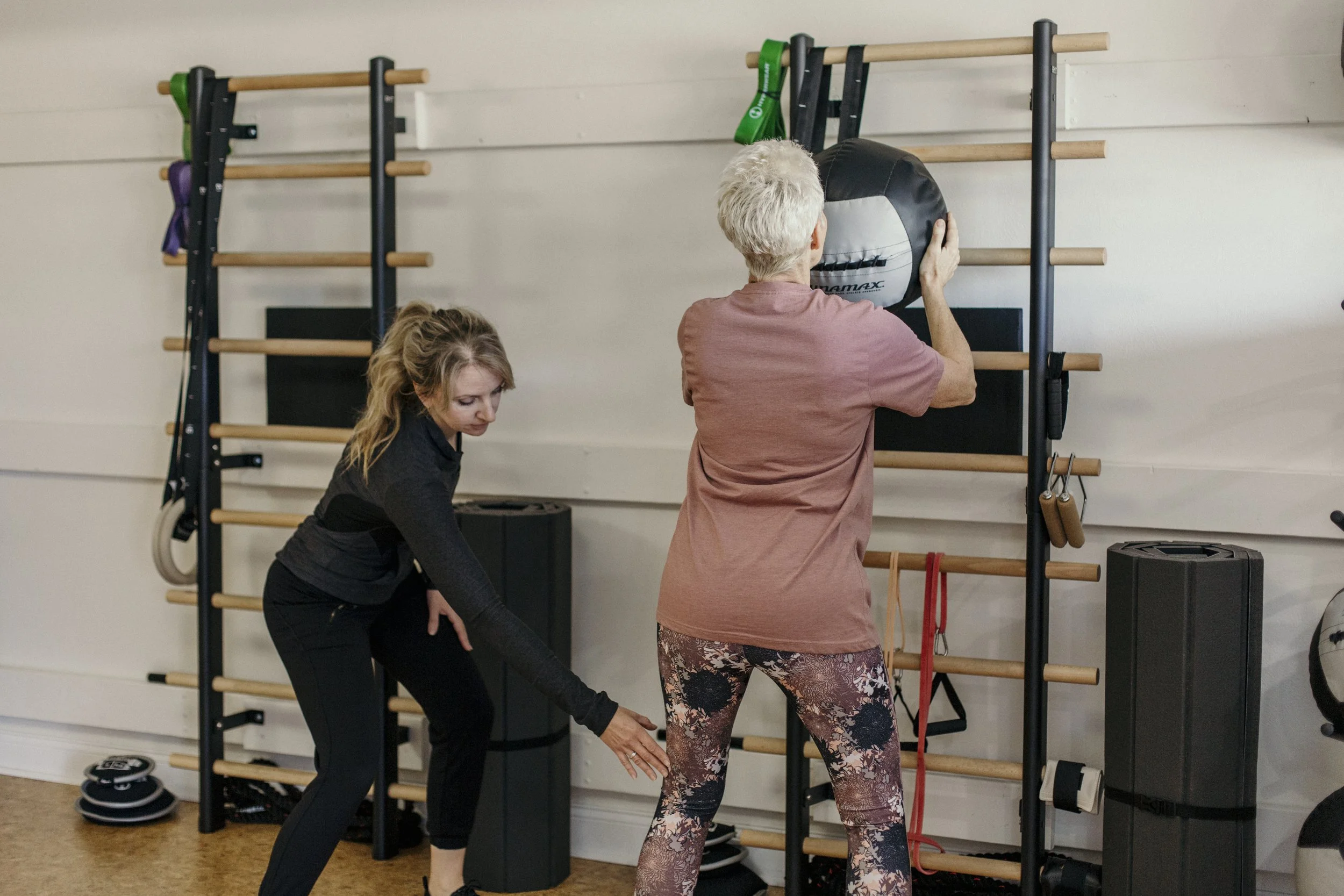
At some point after 60, many women notice they don't feel quite as steady as they once did.
Maybe it's while standing on one foot to put on a shoe. Walking across an uneven yard. Stepping off a curb. Or turning quickly and feeling a little off balance.
While this can be frustrating, it doesn't mean you're destined to lose your balance as you get older.
In fact, balance is something that can be improved.
The mistake many people make is assuming balance problems are only caused by poor balance. In reality, strength plays a major role as well.
That's why in this article, we'll look at one simple balance exercise and one simple strength exercise that can help you feel more steady, confident, and capable in everyday life.
Why Balance Often Declines After 60
Many women assume balance problems are simply a normal part of getting older. While balance often becomes more challenging with age, that doesn't mean there's nothing you can do about it.
One of the biggest reasons balance declines is that many of us spend less time challenging our balance as the years go by. We sit more, move less, and rarely put ourselves in situations that require us to balance on one leg.
Strength can also play a major role. When the muscles in the legs and hips become weaker, it becomes more difficult to control the body and react quickly when you stumble or lose your footing.
The good news is that balance is a skill. And like most skills, it can improve with practice.
That's why exercises that improve both balance and strength tend to be so effective.
Exercise 1: Balance One
When most people think about improving balance, they immediately think about standing on one foot. While balance is more complex than that, standing on one foot is still one of the best places to start.
Many falls occur when we're briefly forced to support ourselves on one leg. This happens more often than most people realize. Walking up stairs, stepping over an object, getting dressed, walking across uneven ground, and stepping off a curb all require the ability to balance on one leg, even if only for a moment.
If you struggle to control your body while standing on one foot, it's common to feel unstable during these everyday activities. That's why Balance One is such a valuable exercise. It's simple, safe, and helps build the foundation needed for better balance.
How To Do Balance One
Step 1: Stand in front of a wall. Stand tall with good posture and keep your eyes looking straight ahead.
Step 2: Keep your arms relaxed at your sides. Slowly lift one foot a few inches off the ground.
Step 3: Hold your balance. If you begin to feel unsteady, lightly tap your toes to the floor to regain control. You should never completely lose your balance. The goal is to challenge yourself while remaining safe.
Step 4: Continue balancing for 30-60 seconds. Then repeat on the other leg. Be sure to practice both sides, even if one side feels easier than the other.
How To Progress The Exercise
Once you can comfortably balance for 60 seconds without needing many toe taps, it's time to make the exercise more challenging.
One of the simplest ways to do this is by closing your eyes. When your eyes are open, your brain uses vision to help keep you balanced. When you close your eyes, your body is forced to rely more heavily on the muscles, joints, and balance systems that help keep you upright.
Start cautiously and close your eyes for only a few seconds at a time. If you begin swaying too much, immediately open your eyes and regain control. The goal isn't to see how long you can stand there with your eyes closed. The goal is to gradually improve your balance and confidence over time.
Exercise 2: High Knee Hold
Improving balance is not only about practicing balance. Strength also plays a major role, especially in the hips.
One common reason people trip is because the foot does not clear the step, curb, or uneven ground in front of them. This can happen when the muscles around the hips are not strong enough to lift the leg as well as they should.
Think about walking up a flight of stairs or stepping onto a curb. Each time you do this, your hip muscles must lift your leg high enough to clear the obstacle in front of you. If they don't, the foot can catch the edge of the step, causing you to stumble forward.
The High Knee Hold is a simple exercise that helps strengthen the muscles that lift your knee toward your body. These muscles are important for walking, climbing stairs, stepping onto curbs, and moving with more confidence.
How To Do The High Knee Hold
Step 1: Stand tall and place your hands on the wall in front of your shoulders.
Step 2: Lift one knee as high as you can. Your knee should move toward your upper body as you lift it. Do not lean to the side. Stay tall the entire time.
Step 3: Once your knee is as high as you can lift it, hold it there for a few seconds. You should feel the muscles in the front of your hip working.
Step 4: Lower your foot back to the ground, then repeat on the other side. Do 10 repetitions on each leg, holding each repetition at the top for a few seconds.
How To Progress The Exercise
To make this exercise more effective over time, focus on lifting your knee a little higher as your strength and mobility improve.
This does not need to happen quickly. At first, your knee may not come up very high, and that is okay. The goal is to stay tall, avoid leaning, and gradually improve your ability to lift and control your leg.
Over time, this can help make stairs, curbs, and everyday walking feel easier and more controlled.
How Often Should You Practice These Exercises?
Like most forms of exercise, consistency is more important than intensity.
You don't need to spend hours working on your balance to see improvement.
For most women, performing these exercises 3 times per week is a great place to start. If you'd like to practice them more often, that's perfectly fine as well.
The key is to make them a regular part of your routine.
Many women begin feeling more confident and steady after several weeks of consistent practice. While everyone progresses at a different pace, small improvements often add up faster than people expect.
The Bottom Line
If you've started feeling a little more wobbly than you used to, don't assume it's something you simply have to accept.
Balance can improve.
Starting with exercises like Balance One and the High Knee Hold can help you build the balance, strength, and confidence needed to move through everyday life more comfortably.
The most important thing is to start somewhere.
A few minutes of consistent practice each week can go a long way toward helping you feel more steady, capable, and confident in the years ahead.
A better next step
These two exercises are a great place to start if you'd like to improve your balance and reduce your risk of trips and falls.
However, many women eventually ask a very good question:
"Is this all I need?"
And the answer is no.
While balance exercises are important, the best path to feeling your absolute best after 60 includes a combination of strength, flexibility, balance, and cardio exercise.
Each plays an important role.
Strength helps you stay capable and confident in everyday life. Flexibility helps reduce stiffness and makes movement easier. Balance helps you feel more steady on your feet. And cardio helps support your heart, energy levels, and overall health.
At A50 Personal Training, we help South Hills women over 50 improve all four so they can stay active, avoid injury, and continue doing the things they enjoy.
Our studio is built specifically for women over 50 who want personal guidance, individualized exercises, and a supportive environment without the pressure or intimidation of a traditional gym.
If you live in the South Hills and would like help finding the safest and most effective exercises for your body, you can apply for a free 1-week personal training trial.
You'll receive personalized coaching, support, and an opportunity to see if A50 is a good fit for you.
You may also enjoy reading:
How to Start Strength Training After 60 (Without Getting Hurt)
ABOUT THE AUTHOR
Jason Zawodniak is the Co-founder of A50 Personal Training, the first personal training studio in the South Hills built exclusively to serve women over 50. With nearly two decades of experience in the fitness industry, Jason noticed early in his career that women over 50 were consistently underserved — showing up to gyms where they felt out of place, unsure of what to do, and afraid of getting hurt. After hearing those same stories from his own clients year after year, he made a decision: in 2017, he opened A50 to create the program he knew this demographic deserved. Today, Jason specializes in helping women over 50 build the strength and flexibility they need to stay active, prevent injury, and keep up with the people and activities they love most.