
With so much conflicting advice about strength training, cardio, and stretching, how do you know what to believe? Learn how to recognize trustworthy exercise advice and determine what's right for you after 60.
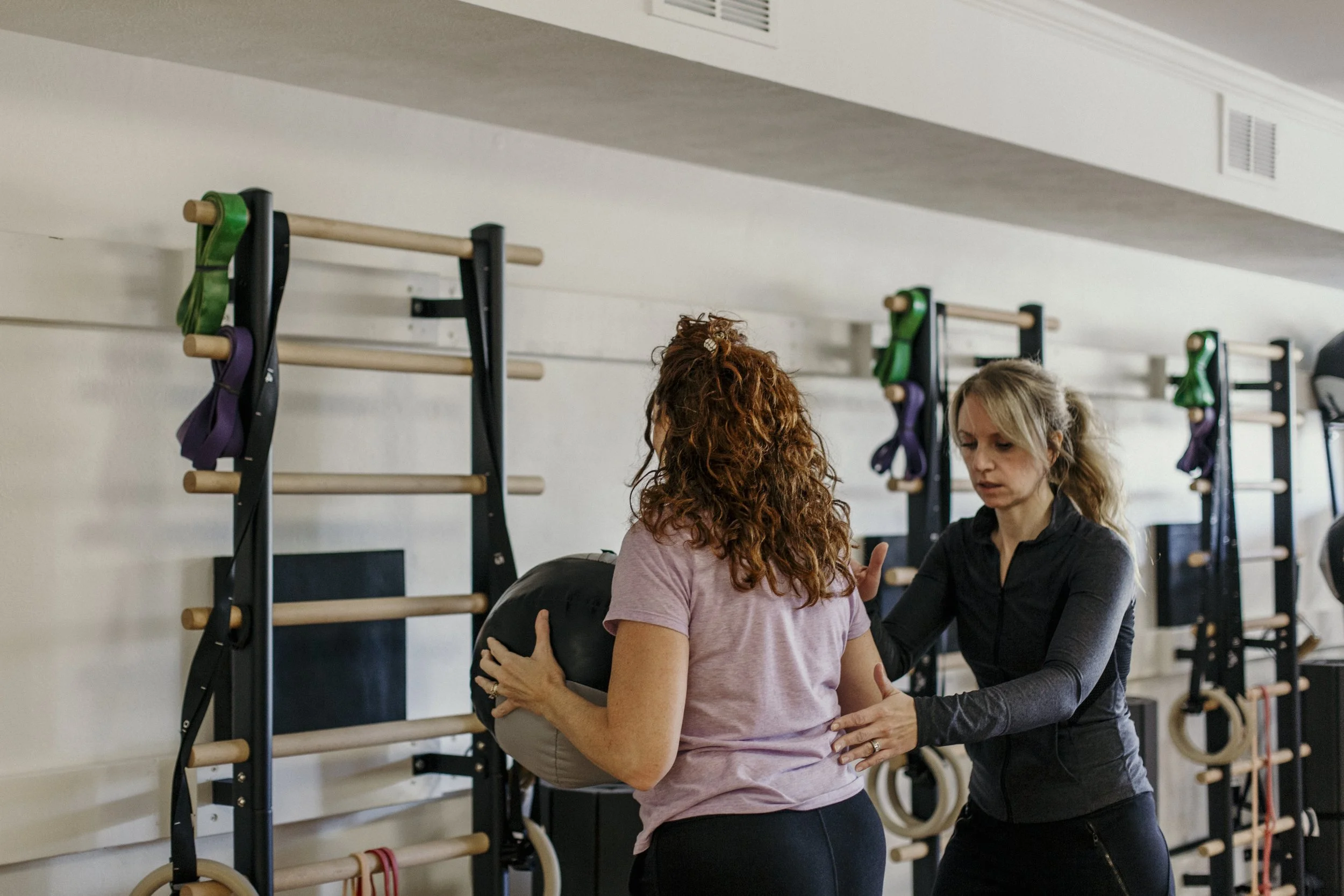
It can be hard to know who to trust when it comes to exercise after 60. There are countless YouTube videos, social media posts, and dozens of gyms, personal training studios, and fitness classes here in the South Hills, all claiming to have the best solution.
I often meet new clients who tell me they feel confused about what to believe. And I don't blame them. There are so many different opinions, both here in our South Hills communities and online, about what you should and shouldn't be doing when it comes to exercise.
In this article, I'm going to share four ways to sort through all that advice so you can better understand what to listen to and what you may want to ignore at this stage of life.
Caution #1: Are They Trying to Sell a Product?
Countless businesses have a primary goal of selling a fitness-based product. In some cases, this is an exercise machine, a piece of equipment, or even exercise clothing or shoes. This is very common on social media and YouTube.
You'll often notice these content creators are being paid by someone to sell a specific product. While there's nothing wrong with this, it's very important to take a closer look at what they're selling. The first question you need to ask yourself is, "Who is this product really for?"
There are a ton of great exercise products out there, but not every product is designed for a woman over 60. For example, if someone is selling a new adjustable dumbbell that goes up to 100 pounds, this may be the perfect tool for someone who's been training for many years and needs that much weight. But for many of the women I work with, this is far more than they need when they're just getting started.
So the next time someone on social media or YouTube is selling a fitness product, it's important to ask yourself who the product is actually for. You may find that it's simply not the right product for you at this stage of life.
Caution #2: Are They Offering a Short-Term Solution?
Both online and at local South Hills gyms, you'll notice a push to sell short-term solutions. For example, you might see something on Facebook that says, "6-Week Body Transformation." You must use extreme caution with any product or program offering a short-term solution.
I get it. We would all love to have outstanding long-term results in just six weeks. It sounds amazing. But then reality sets in. Many of the women I meet who are in their 60s or 70s have a lot of stiffness and weakness that have built up over the years. It's not their fault. Many of them were focused on their work, raising children, or the many appointments on their schedules and simply didn't have the time to focus on themselves.
That said, the stiffness and weakness in their bodies have been years or even decades in the making. We can't expect to safely correct what has taken years or decades to develop in just six weeks. It simply doesn't work that way. When you're getting back into fitness or starting for the first time after 60, you must take your time.
The question shouldn't be, "How fast can I get results?" It should be, "How can I safely get results that last?" These are two very different questions. If someone is offering a short-term fix, it's likely a product or service you'll want to avoid after 60.
Caution #3: Are They Specialists or Generalists?
I recently had a conversation with a friend who is about 40 years old. She's in good shape and goes to a large boot camp class every week. She loves it and, as of today, has seen good results. She mentioned that this boot camp class is for everyone, basically all ages, men and women, people who are fit and people who are out of shape.
When someone is in their 20s, 30s, and maybe 40s, they can often get by with a more general style of training. The program is essentially one-size-fits-all. Sure, the coaches will often adjust exercises based on someone's fitness level, but the overall program is designed for a wide range of people.
For my friend, this is perfect. She's doing great, and I'm happy for her. That said, after 60, things are different. The body at 65 isn't the same as it was at 45. While this is common knowledge, when it comes to the fitness industry, many assume that what works perfectly at 45 must also be great at 65.
This simply isn't true. After 60, the body may have years or decades of stiffness and weakness that have quietly built up. The approach to fitness needs to be different. It becomes more about quality than quantity. It's no longer about setting new records or competing with other people in the room.
It's about doing exercises that work for your body. It's about going at a pace that is challenging but safe and appropriate. So, the next time you hear someone talking about a fitness program they love, it's important to ask, "Who is this program actually for?" Ideally, you want to work with someone who specializes in your age group and understands how to best help you.
Caution #4: Are They Focused on One Style of Training?
Many workouts have a specific style of training. For example, a spin class will use bikes, Pilates will often use reformers, and a yoga class will focus on a specific style of yoga. This isn't necessarily a bad thing. If someone is looking for a particular style of training, this makes things easy.
The challenge is that after 60, how your body feels can change from month to month or even week to week. It's important that whatever program you choose can easily be adjusted to fit your needs. You don't want to be limited to a single approach or style of training since your body may need something very different from one week to the next.
For example, a lot of my clients have arthritis in their knees. If I plan a standing strength training routine for one of them on a Monday, the entire program may need to change to a floor routine based on how her knees are feeling that day. She may prefer to lie on her back rather than stand and put weight through her knees. The important thing is that we can make those changes immediately instead of forcing her to follow the original plan.
At the end of the day, there is no such thing as the "perfect workout." After 60, you need a workout that can change based on your needs for that particular day. It can't be a one-size-fits-all approach at this stage of life. The workout should be far less about the equipment being used and far more about your specific needs on that particular day.
One of the greatest challenges women over 60 often face is figuring out which exercises they should focus on when they're just getting started. I wrote another article called 3 Strength Exercises for Women Over 60 Starting From Scratch to help answer this common question.
For those who prefer a more hands-on, personalized approach to fitness, you can apply for a free week of personal training if you live in Mt. Lebanon, Upper St. Clair, or one of the surrounding South Hills communities we serve.
ABOUT THE AUTHOR
Jason Zawodniak is the Co-founder of A50 Personal Training, the first personal training studio in the South Hills built exclusively to serve women over 50. With nearly two decades of experience in the fitness industry, Jason noticed early in his career that women over 50 were consistently underserved — showing up to gyms where they felt out of place, unsure of what to do, and afraid of getting hurt. After hearing those same stories from his own clients year after year, he made a decision: in 2017, he opened A50 to create the program he knew this demographic deserved. Today, Jason specializes in helping women over 50 build the strength and flexibility they need to stay active, prevent injury, and keep up with the people and activities they love most.