
I’m Over 60. Is It Too Late to Start Exercising?
If you’re over 60 and haven’t exercised in years, you may be wondering if you’ve waited too long to start. This article looks at what really matters when beginning again, especially if you feel weak, stiff, or out of shape.
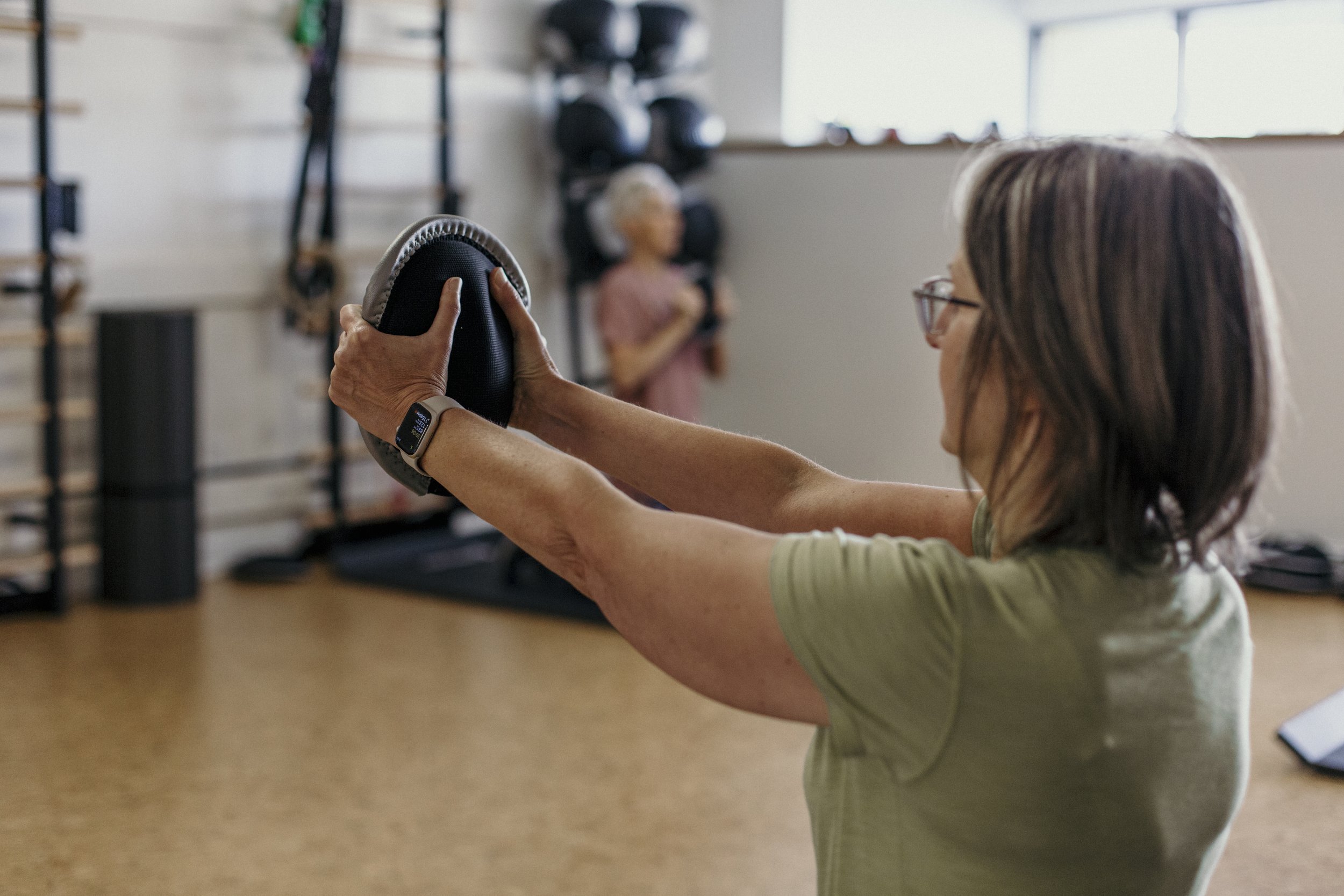
“Is it too late? I’m over 60 and haven’t exercised in years.”
I’ve heard this and similar questions from women who are new to my personal training studio. It’s a great question. It’s easy to feel like it’s too late, or that you should have started years, or even decades, ago.
And while I can’t speak for every suburb, I live in the South Hills and know how extremely busy life can get in our area. Between work, raising kids, their sports and activities, errands, and everything else that came with those years, it was easy to put yourself on the back burner. Now the kids are older, many women we work with have grandchildren, and they’re starting to think more about their own strength, health, and what they want to be able to keep doing in the years ahead.
The good news is, it’s not too late.
In this article, I want to break down four steps you can take to go from not exercising at all to making real progress toward your fitness goals after 60. While it’s not easy, it is possible.
Step 1: Change the Way You Think About Exercise
The first change many women have to make is in their minds.
I hear it all the time: “I really don’t like exercise.” “I’m not a person who works out all the time.” These are normal thoughts, and they’re very common among women over 60 who are just getting started.
Most don’t see themselves as that person. The person who loves to work out.
The good news is, you don’t need to love working out. You just need to understand what working out can provide for your future.
Take brushing your teeth, for example. You don’t have to love brushing your teeth. You do it every day, including when you travel, because you understand the importance of it for your dental health.
Working out is challenging. The reality is, even people who exercise consistently don’t always feel like working out. Most of us are busy and have other things going on. We choose to work out because we understand the importance it can play in our future.
Exercise is a tool that can help you continue doing the things you love for longer. That’s why most people exercise.
So you don’t need to become the person who can’t wait to work out or who suddenly loves exercise. You can still get great long-term results without becoming that person.
Step 2: Know the Reason Why You Exercise
One of the first questions I ask new personal training clients is, “Why do you want to reach your fitness goals?”
Most people will start by telling me they want to be stronger, more flexible, have better balance, more endurance, more energy, or some combination of these.
Which is great. But this is still very surface level.
You need to know why those goals matter to you. You need to know the deeper reason behind them.
For example, some women will say they want to get stronger so they can keep up with their grandkids as they get older.
Can you see the difference?
There’s a big difference between saying, “I want to get stronger,” and saying, “This is for my future. I want to keep up with my grandkids and not miss out.”
Which one is going to excite you more? Which one is going to get you to the gym more consistently?
I can tell you that focusing only on the surface goal of “I want to get stronger” usually isn’t enough to give you the determination or motivation to exercise when life gets busy.
It’s important to know your why.
This is what you’re fighting for. It varies from person to person, but be sure to take the time to figure out your reason. It’s the fuel you’ll need to get started and remain motivated.
Step 3: Know What Exercises Work for Your Body
As we age, a lot changes. Joints can become stiffer, muscles can become weaker, and balance can start to feel less stable.
These changes often happen slowly, over years and decades. That’s why it’s important to ask, “What exercises work for my body at this stage of life?”
What worked well in our 20s and 30s may not work the same way after 60. Decades have passed, and we have to recognize that we don’t have the exact same body we had back then. That means the way we exercise may need to change too.
A one-size-fits-all workout rarely makes sense after 60. That style of workout may have been fine at 20 or 30, but today the workout should fit your specific needs, abilities, and goals.
Instead of high-impact exercises that can be harder on the joints, you may need lower-impact or no-impact options that allow the joints to feel good while the muscles get stronger.
Instead of competing with other women in a group class or gym setting, you’ll want to focus more on yourself and less on what everyone else is doing.
While it’s common for local gyms to offer one-size-fits-all workouts, or for certain environments to feel highly competitive, we have to recognize that those workouts may be great for some people but not for everyone.
At a certain age, the workout often needs to go from generalized to more personalized. From what I’ve seen, this often starts becoming more important somewhere between the ages of 50 and 60, although it can vary quite a bit from person to person.
Step 4: Take the Next Best Step
It all starts with one step in the right direction.
For most of us, this is one of the hardest parts. Early on, there is little to no momentum, so even the simplest step can feel like climbing a mountain.
While I can’t give one cookie-cutter next step for everyone reading this, I can share a few of the best first steps I’ve seen people take.
1) Tell a friend that you’re going to start exercising.
Even better, share your reason why.
This adds some accountability because that friend is likely to ask you how it’s going.
2) Research personal trainers or gyms in your area.
Doing some research is a must. Call or email a few places and learn more about what they offer.
Don’t make assumptions. Get your questions answered before visiting.
3) Give yourself a start date.
Just like with any effective goal-setting strategy, give yourself an official start date.
Maybe it’s 30 days from now so you have enough time to research your options and learn more about the gyms and personal trainers in your area.
Why You Matter
You’ll see there’s a common theme throughout this article, and that is this: you matter.
Yes, there are many other important areas of your life that can’t be neglected. Family, work, grandkids, responsibilities, and everything else still matter. But we often remind our clients that they matter too. The better they feel and the stronger they become, the more they’re able to give to the people they care about most.
Some of my clients initially feel a little selfish because they’re starting to focus on their health and future, possibly for the first time in a long time. We remind them that taking care of themselves doesn’t take away from the people around them. When they are stronger, more flexible, and have more energy, they’re often able to do more with the people they love.
If you live in Mt. Lebanon, Upper St. Clair, Peters Township, or another South Hills community and feel like you may need a hand getting started, I’d be happy to help you take your next step. Most people simply apply for a free week of personal training. This gives you a chance to see and feel which exercises actually work best for your body after 60. It’s one of the easiest ways to get started.
Regardless of whether you ever train with us, I also have another article called How to Start Strength Training After 60 (Without Getting Hurt). It breaks down in greater detail what it can look like to start getting stronger safely after 60.
ABOUT THE AUTHOR
Jason Zawodniak is the Co-founder of A50 Personal Training, the first personal training studio in the South Hills built exclusively to serve women over 50. With nearly two decades of experience in the fitness industry, Jason noticed early in his career that women over 50 were consistently underserved — showing up to gyms where they felt out of place, unsure of what to do, and afraid of getting hurt. After hearing those same stories from his own clients year after year, he made a decision: in 2017, he opened A50 to create the program he knew this demographic deserved. Today, Jason specializes in helping women over 50 build the strength and flexibility they need to stay active, prevent injury, and keep up with the people and activities they love most.