
5 Exercises to Help You Stay Active After 50
The right exercises can help you stay active, strong, and flexible after 50. Learn five simple exercises that can make everyday activities easier and help you continue doing the things you enjoy.
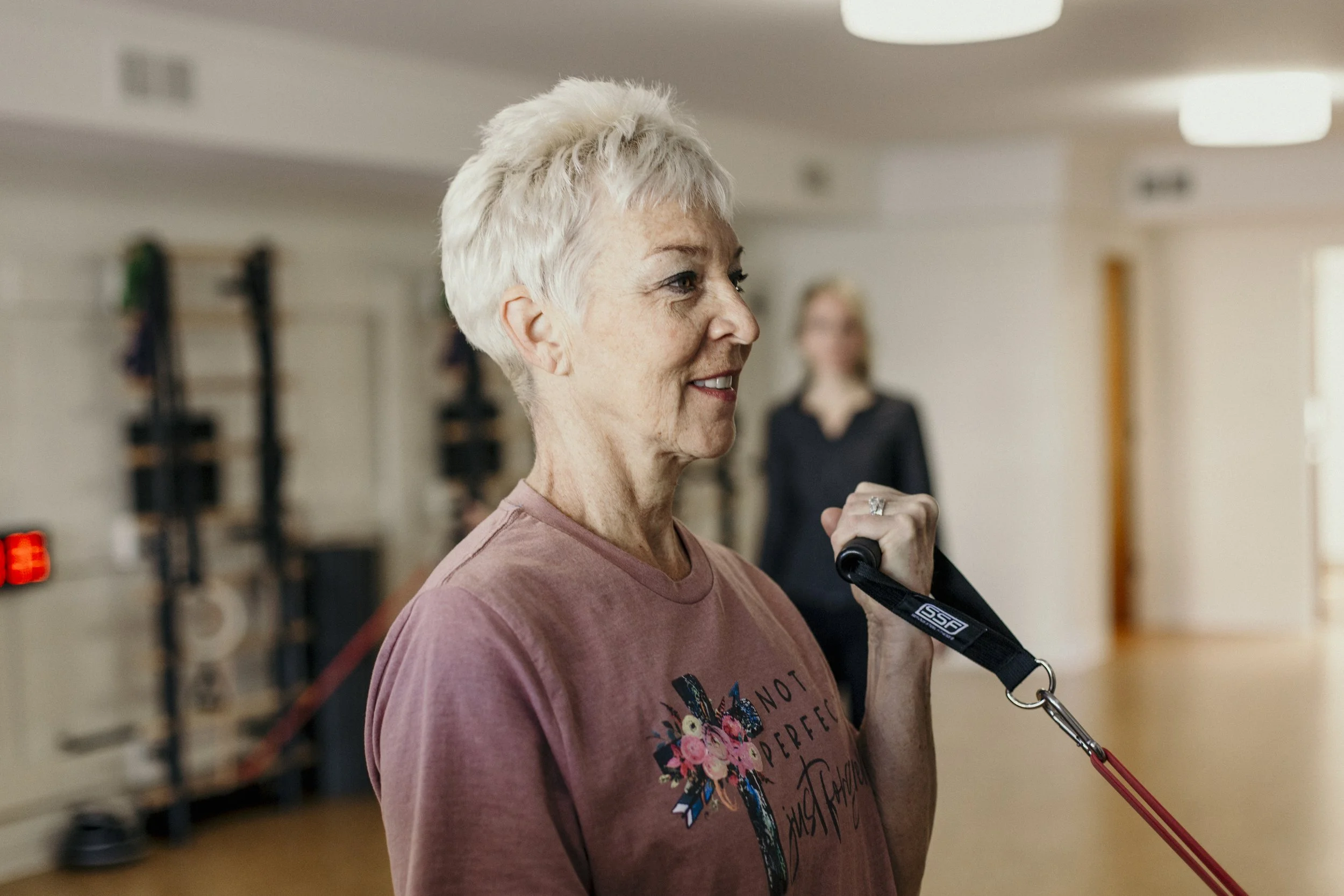
There comes a point where many women begin noticing that everyday activities don't feel quite as easy as they once did. Carrying groceries, climbing stairs, gardening, traveling, or even getting up from the floor may require a little more effort than they used to.
The good news is that staying active after 50 doesn't require long workouts or complicated exercise routines. In fact, a handful of well-chosen exercises can go a long way toward helping you maintain your strength, flexibility, and balance so you can continue doing the things you enjoy.
The challenge is knowing which exercises are actually worth your time.
With so much conflicting advice online, it's easy to feel overwhelmed. Some workouts are simply too intense, while others don't do much to help with the activities that matter most in everyday life.
In this article, I'll share five exercises I believe offer some of the biggest benefits for women over 50. They're exercises we regularly use with our clients because they help build the kind of strength, flexibility, and stability that carries over into real life—not just the gym.
1. Flexibility Exercises
One of the first things many women notice after 50 is that their muscles don't feel as loose as they once did. Reaching overhead, bending down to tie your shoes, getting out of bed, or turning to look over your shoulder while driving can all start to feel more restricted.
The problem isn't just that tight muscles feel uncomfortable. Tight muscles also make you more prone to injury. When your muscles can't move the way they should, other muscles and joints are forced to compensate, placing unnecessary stress on your body.
The good news is that improving your flexibility doesn't require spending an hour in a yoga class. That's one of the biggest misconceptions I hear. Just 10 minutes a day can make a noticeable difference.
Flexibility exercises are simple. Gently move into a stretch, relax, and hold the position without bouncing or forcing the movement. Your goal is to gradually help your muscles become less restricted over time.
A great place to start is by holding each stretch for 1–2 minutes. If you hold each stretch for one minute, you can complete 10 excellent stretches in just 10 minutes.
I recommend focusing on these four areas first:
Calves
Quadriceps (the muscles on the front of your thighs)
Shoulders
Glutes (the butt muscles)
There are certainly many other muscles worth stretching, but improving flexibility in these four areas alone can make a noticeable difference in how your body feels throughout the day.
One of my favorite things about stretching is how people often feel afterward. Many describe it as feeling similar to getting a massage. Their body feels looser, less restricted, and everyday movement simply feels easier.
2. Mobility Exercises
Many people think flexibility and mobility are the exact same thing.
They're not.
While flexibility focuses on your muscles, mobility focuses on your joints. Both are important, but they serve different purposes.
Think of mobility as strength training for your joints.
Mobility exercises are active movements that help your joints become stronger and move through a greater range of motion. As your joints become stronger, they often become less stiff and more capable of handling everyday activities.
If getting off the floor feels difficult, climbing out of a low vehicle takes extra effort, or standing up from a soft couch isn't as easy as it once was, limited mobility may be part of the reason.
One simple mobility exercise you can try at home focuses on the hips.
Stand facing a wall with both hands resting on it at shoulder height. Keep your elbows straight and stand tall. Slowly lift one knee as high as you comfortably can. Once you can't lift it any higher, hold that position for five seconds before lowering your leg. Repeat 8–10 repetitions on each side.
When getting started, I recommend focusing on three key joints:
Ankles
Hips
Shoulders
Improving mobility in these three joints alone can make walking, climbing stairs, reaching overhead, and getting out of chairs or vehicles feel much easier.
3. Balance Exercises
Balance is one of the easiest areas to overlook because you rarely think about it until it starts becoming a problem.
Fortunately, there's a simple way to see where you stand.
Stand tall with your arms relaxed at your sides. Lift one foot a few inches off the ground and begin counting out loud. The moment your foot touches the floor or your arms move away from your sides to catch yourself, stop counting.
If you can't comfortably reach 40 seconds on each leg, it's a good sign that balance training deserves more attention.
Many people are surprised by that number. Standing on one leg for 40 seconds doesn't mean you have exceptional balance. It simply means you've reached the minimum benchmark. Once our clients can comfortably balance for 40 seconds, we begin progressing them to more challenging exercises.
It's easy to think trips and falls only happen to people in their 80s or 90s, but balance often begins declining much earlier if it isn't challenged regularly.
The encouraging news is that getting started couldn't be simpler.
Stand on one foot for as long as you comfortably can. Then repeat on the other side. Perform 2–3 rounds on each leg several times a week.
4. Strength Exercises
If I had to choose just one type of exercise after 50, it would be strength training.
Strength is the foundation that makes almost everything in life feel easier.
Walking upstairs, carrying groceries, gardening, lifting luggage, and playing with grandchildren all become easier when your muscles are stronger.
Research has shown that adults gradually lose muscle as they get older. It may not seem significant at first, but year after year that muscle loss begins to add up.
Often, the first signs are subtle. Maybe your legs become tired after climbing a couple flights of stairs, or your back begins aching while gardening or carrying heavier objects. These are often signs that your muscles could benefit from becoming stronger.
Strength training is incredibly beneficial, but it's also the area where proper form and technique matter the most.
Two warning signs that you're probably doing too much or performing the wrong exercises are:
You're more than minimally sore for several days afterward.
Your joints hurt during the exercise.
If either of these happens, stop and choose a different exercise. Strength exercises should challenge you, but they shouldn't be so difficult that you risk injuring your muscles or joints.
After a well-designed strength workout, your body should generally feel stronger, looser, and more energized—not exhausted or beaten up.
For most women over 50, I recommend performing two to three full-body strength workouts each week. This provides enough challenge to build strength while giving your body adequate time to recover.
5. Cardio Exercises
Cardio is probably the most familiar type of exercise, but it's still an essential part of staying active after 50.
The key is choosing activities that are gentle on your joints and realistic enough that you'll continue doing them consistently.
Some of my favorite low-impact cardio options include:
Brisk walking
Swimming
Biking
Using a rebounder (a small exercise trampoline designed for adults)
Most women are familiar with the first three, but fewer have heard of rebounders. They're an excellent option for anyone looking for a low-impact workout that's much easier on the joints than many of the high-impact classes commonly offered at gyms.
If you don't currently have a cardio routine, don't feel like you need to jump into long workouts.
Start with just 10 minutes a day.
As your endurance improves, gradually increase your time. Starting small is often the safest and most sustainable approach. The best exercise routine is the one you'll continue doing.
When you combine regular cardio with flexibility, mobility, balance, and strength training, you'll build a well-rounded routine that helps you stay active, capable, and confident for years to come.
Not sure where to begin?
If reading this article left you wondering which exercises are best for your body, you're not alone.
Many women over 50 know they should be exercising, but they're unsure where to start or whether they're choosing the right exercises. It's easy to become overwhelmed by all the conflicting advice online.
The truth is there isn't one perfect exercise program for everyone. The best routine is one that's designed around your current strength, flexibility, balance, and goals.
At A50 Personal Training, we help South Hills women over 50 build strength, improve flexibility, and stay active with exercise programs designed specifically for them.
Our private studio is built for women who want personal guidance without the pressure, confusion, or intimidation often found in larger gyms and fitness classes.
If you live in the South Hills and would like help creating a safe, personalized exercise plan, you can apply for a free 1-week personal training trial.
You'll receive personal coaching, individualized guidance, and the opportunity to see if A50 Personal Training is the right fit for you.
Here's another article you may enjoy:
The Best Types of Exercise for Building Bone Strength After 50
ABOUT THE AUTHOR
Jason Zawodniak is the Co-founder of A50 Personal Training, the first personal training studio in the South Hills built exclusively to serve women over 50. With nearly two decades of experience in the fitness industry, Jason noticed early in his career that women over 50 were consistently underserved — showing up to gyms where they felt out of place, unsure of what to do, and afraid of getting hurt. After hearing those same stories from his own clients year after year, he made a decision: in 2017, he opened A50 to create the program he knew this demographic deserved. Today, Jason specializes in helping women over 50 build the strength and flexibility they need to stay active, prevent injury, and keep up with the people and activities they love most.