
Strength, Cardio, or Flexibility: What Should Women Over 60 Focus On First?
Strength training, cardio, and flexibility all matter after 60, but when you’re just getting started, it can be hard to know where to begin. This article breaks down what each type of exercise does and what women over 60 should focus on first.
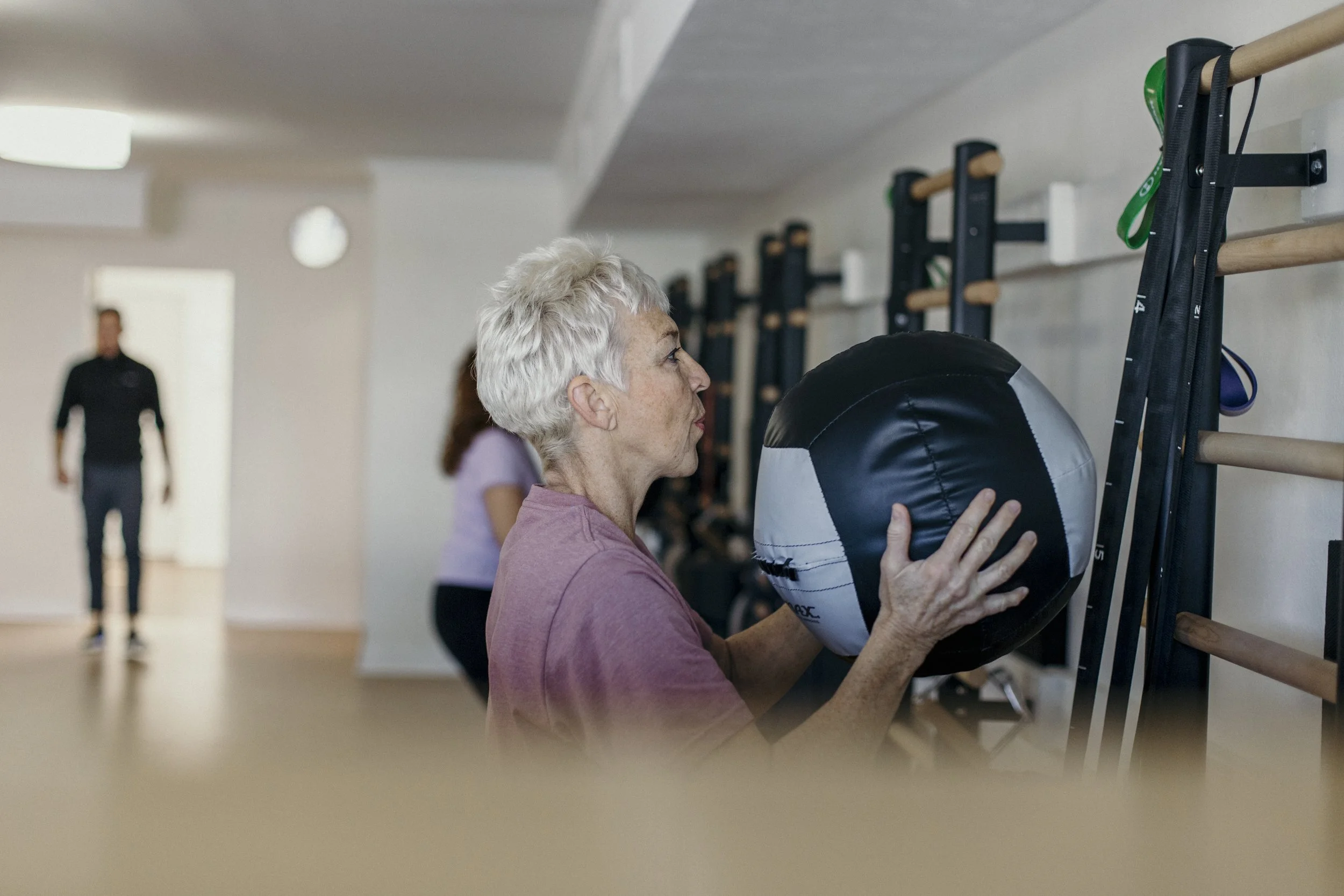
After working with hundreds of South Hills women over 50, one of the most common goals we hear, especially from women over 60, is simple:
“I want to stay active. I want to continue doing the things I love.”
And that makes perfect sense.
I live in the South Hills, and you see it everywhere. Women over 60 are walking through Bird Park in Mt. Lebanon, playing golf at St. Clair Country Club, kayaking at Peters Lake Park, and enjoying countless other activities throughout our communities.
But knowing you want to remain active and knowing how to exercise to support that goal are two different things.
If you’re trying to figure this out on your own, you may be wondering where to put most of your attention. Should you focus on strength training? Cardio? Flexibility? And if all three matter, which one should come first?
That is exactly what we’re going to break down in this article.
At A50 Personal Training, our clients begin with a full assessment and receive a personalized plan that includes strength training, cardio, and flexibility based on where they are starting. They do not have to decide on their own which type of exercise matters most or how much of each they should be doing.
So this article is really for the woman who is trying to make those decisions on her own and wants a clearer understanding of what to prioritize after 60.
Step 1: Cardio - Get More Steps In
While strength, cardio, and flexibility are all key to staying active, strong, and healthy, when you’re on this journey alone, I think it’s best to focus on building one category at a time.
Why?
It can be very overwhelming to start a new flexibility, strength, and cardio routine all on Day 1. By focusing on one category at a time, you have a much better chance of building an exercise habit that lasts for the long term.
The first goal is to look at how much walking you’re currently doing. My first question would be: How much brisk walking are you doing right now?
Brisk walking plays an important role in keeping your heart and lungs healthy, and it’s the first area I would consider when you’re starting this journey by yourself. A good goal for most women over 60 is to gradually build toward about 20–40 minutes of brisk walking a day. Of course, that number can vary depending on the person and where you’re starting.
So what exactly is brisk walking?
I often tell my personal training clients to imagine that you’re at the airport and your next flight is leaving in 10 minutes. You’re walking with a purpose because you need to get to that gate.
That’s very different from the walking you may do at The Fresh Market, Trader Joe’s, or Whole Foods, where you walk for a bit, stop, look at something, and then start again. Brisk walking is more continuous and should be at a pace you can safely tolerate without pain or discomfort.
That said, even 20 minutes of brisk walking can feel overwhelming when you’re first starting.
So don’t start there.
If you’re currently doing no brisk walking, start with a five-minute brisk walk each day this coming week. Once that starts to feel like part of your normal routine, add another five minutes.
Trying to suddenly add 20 or 40 minutes of additional walking can feel like a lot. Progress slowly. Remember, the goal is not to see how much exercise you can do this week. The goal is to build an exercise habit you can continue for years.
And a common question I get is: “What if it’s too hot outside or it’s raining?”
That’s a fair question for anyone living in the South Hills during the summer months. I often recommend walking indoors. The Galleria of Mt. Lebanon and South Hills Village can both be great options on a hot or rainy day.
The important part is finding a way to get the walking in consistently.
Step 2: Flexibility - Do 5–7 Daily Stretches
Once you’re in a good walking routine, it’s time to begin adding some daily stretching.
After 50, the muscles and joints will often feel more stiff and restricted than they used to. That can make enjoying some of your favorite activities feel harder.
As with cardio, you want to proceed gradually. If you overwhelm yourself with more stretches than you can comfortably fit into your day, there’s a good chance you won’t continue doing them.
I’ll often get questions like: “What should I stretch?” or “How many stretches should I do?”
For someone who is trying to do this on her own, I think a good goal is to eventually build toward 5–7 stretches a day.
At first, I would focus on three key areas: your shoulders, hips, and ankles.
Sure, there are many other areas we could stretch as well, but focusing on these three areas gives you a simple place to start without turning stretching into another overwhelming routine.
One simple but effective stretch you could start with is the Single Knee-to-Chest Stretch. This helps stretch the hips, which is an important area to keep flexible after 50.
To do it with good form, lie on your back with both legs straight. Pull one knee toward your chest while keeping the other leg flat on the floor. Hold that knee toward your chest for about two minutes, then repeat on the other side.
You should feel a comfortable stretch. You should not be forcing yourself into a position that hurts.
And if you’re not currently stretching at all, I would recommend starting with just one stretch a day and building up to 5–7 stretches a day.
Again, remember the goal: create a long-term exercise habit. It’s much better to start small and continue doing it than to create an enormous stretching routine that only lasts a couple of weeks.
Step 3: Strength - Do 3–5 Strength Exercises
When it comes to changing what your body is capable of doing after 50, strength exercises may give you the greatest return.
Strength training gives you the stronger muscles you need to remain active, but it also helps strengthen your bones, which becomes increasingly important as you get older.
So why wouldn’t I make strength training Step 1?
That’s a great question.
If you’re trying to do this on your own, I would start with cardio and flexibility because they’re generally easier to begin and implement. Brisk walking and stretching are fairly simple compared with strength training, which requires more time, attention, and practice to do safely.
If someone chooses the wrong strength exercise for her body, or even the right exercise with poor form, she could potentially hurt herself.
That’s why when you begin strength training after 50, and especially after 60, it’s important to pay attention to what you’re feeling and avoid exercises that are making your joints hurt.
I told one of my clients the other day:
“It’s okay to feel it in the muscle, but you don’t want to feel it in the joint.”
There’s a big difference.
Feeling your muscles working and becoming tired is a normal part of strength training. Joint strain or pain is different and should not simply be pushed through.
One strength exercise you can start with is what I call the Elevated Plank.
Place your forearms on the wall in front of you, with your elbows around shoulder height. Then take a step back so your body is on an angle. Keep your knees straight and your hips tucked in so your body stays in a straight line.
Hold that position and allow your abdominal muscles to work.
If it feels too easy, take another small step back from the wall to make the exercise more challenging.
This is a simple, beginner-friendly core exercise that can give you a place to start.
And yes, we also want to avoid overwhelm when it comes to strength training.
If you’re starting from nothing, doing one strength exercise three times a week is a perfectly reasonable beginning. Learn it, get comfortable with it, and then add another exercise.
Over time, the goal is to build toward about 3–5 full-body strength exercises three times a week.
That’s also what my personal training clients do. They’re all women over 50, and we’ve found that a small number of well-chosen strength exercises done consistently can work extremely well.
You do not need to start with a long, complicated strength routine.
Start with one exercise. Build from there. And continue adding only as you become comfortable with what you’re already doing.
Start Small and Build From There
It’s not about building the perfect exercise routine. It’s about building an exercise habit you can continue for the rest of your life. If you’re doing this on your own, start small, get comfortable with one part of the routine, and then build from there.
If you’d like some help, A50 Personal Training offers a free one-week personal training trial for South Hills women over 50. It gives you a chance to see what a personalized approach to strength, cardio, and flexibility can look like for you.
And if you’d like another simple place to start on your own, you may also find my article, 5 Exercises to Help You Stay Active After 50, helpful.
ABOUT THE AUTHOR
Jason Zawodniak is the Co-founder of A50 Personal Training, the first personal training studio in the South Hills built exclusively to serve women over 50. With nearly two decades of experience in the fitness industry, Jason noticed early in his career that women over 50 were consistently underserved — showing up to gyms where they felt out of place, unsure of what to do, and afraid of getting hurt. After hearing those same stories from his own clients year after year, he made a decision: in 2017, he opened A50 to create the program he knew this demographic deserved. Today, Jason specializes in helping women over 50 build the strength and flexibility they need to stay active, prevent injury, and keep up with the people and activities they love most.