
How Much Does Personal Training Cost in the South Hills?
Personal training costs can vary widely depending on the type of training, frequency, and level of guidance. Here’s what to expect when comparing personal training options in Mt. Lebanon, Upper St. Clair, and Peters Township, and what to consider before deciding what’s right for you.
“How much is personal training?”
It’s a question I hear often, especially from women who have never worked with a personal trainer before.
And it makes sense. If you’re considering personal training in Mt. Lebanon, Upper St. Clair, Peters Township, or elsewhere in the South Hills, you probably want to have some idea what it will cost before you take the next step.
The challenge is that there isn’t one simple answer. The cost of personal training can vary quite a bit, and price alone doesn’t always tell you what you’re actually getting.
In this article, I’ll break down what you can generally expect to pay, what affects the cost, and what to consider when comparing your options.
And before we’re done, I also want to look at a part of this conversation that is easy to overlook: the cost of not exercising at all.
The Cost of One-on-One Personal Training
One-on-one personal training has been around for decades, and it can be a great option for some women in the South Hills.
The concept is simple. It’s one personal trainer and one client. That’s it.
The personal trainer creates a program specifically for that client and helps make sure the exercises are appropriate, effective, and performed correctly. In many cases, a personal training session will last somewhere between 30 and 60 minutes.
One of the biggest advantages is obvious. You have the trainer’s full attention.
For a woman who is new to exercise, worried about doing something incorrectly, or simply wants a lot of personal guidance, that can be very valuable. The individualized attention and personalized program can also help the client make good progress.
The biggest downside is cost.
One-on-one personal training is usually the most expensive type of personal training. In the South Hills, it would not be unusual to see prices around $59 to $99 per session, and sometimes higher.
If someone trains two or three times per week, that can become a fairly significant monthly expense.
Another thing I would consider is the personal trainer.
When someone works one-on-one, she may build her entire routine around one person. Trainer turnover can be high in the fitness industry, especially in larger gyms. If that trainer eventually leaves, she may find herself starting over with someone new.
So if you’re considering one-on-one personal training in the South Hills, I would ask a few questions before getting started.
How long have you been a personal trainer?
Personally, I would look for someone with at least several years of experience. Five years or more would make me much more comfortable than someone who recently entered the fitness industry.
Do you plan on being a personal trainer long term?
It may sound like an unusual question, but it’s worth asking. Someone may be going back to school, preparing for another career, or simply viewing personal training as something temporary.
And finally, how many of your clients are women around my age?
This one is especially important.
If someone is in her 60s or 70s, a trainer who spends most of the day working with people in their 20s may not have much experience helping someone like her.
That doesn’t automatically make the trainer a bad trainer. It simply means it is worth finding out whether that trainer has experience working with women who have similar goals, concerns, and starting points.
The Cost of Small Group Personal Training
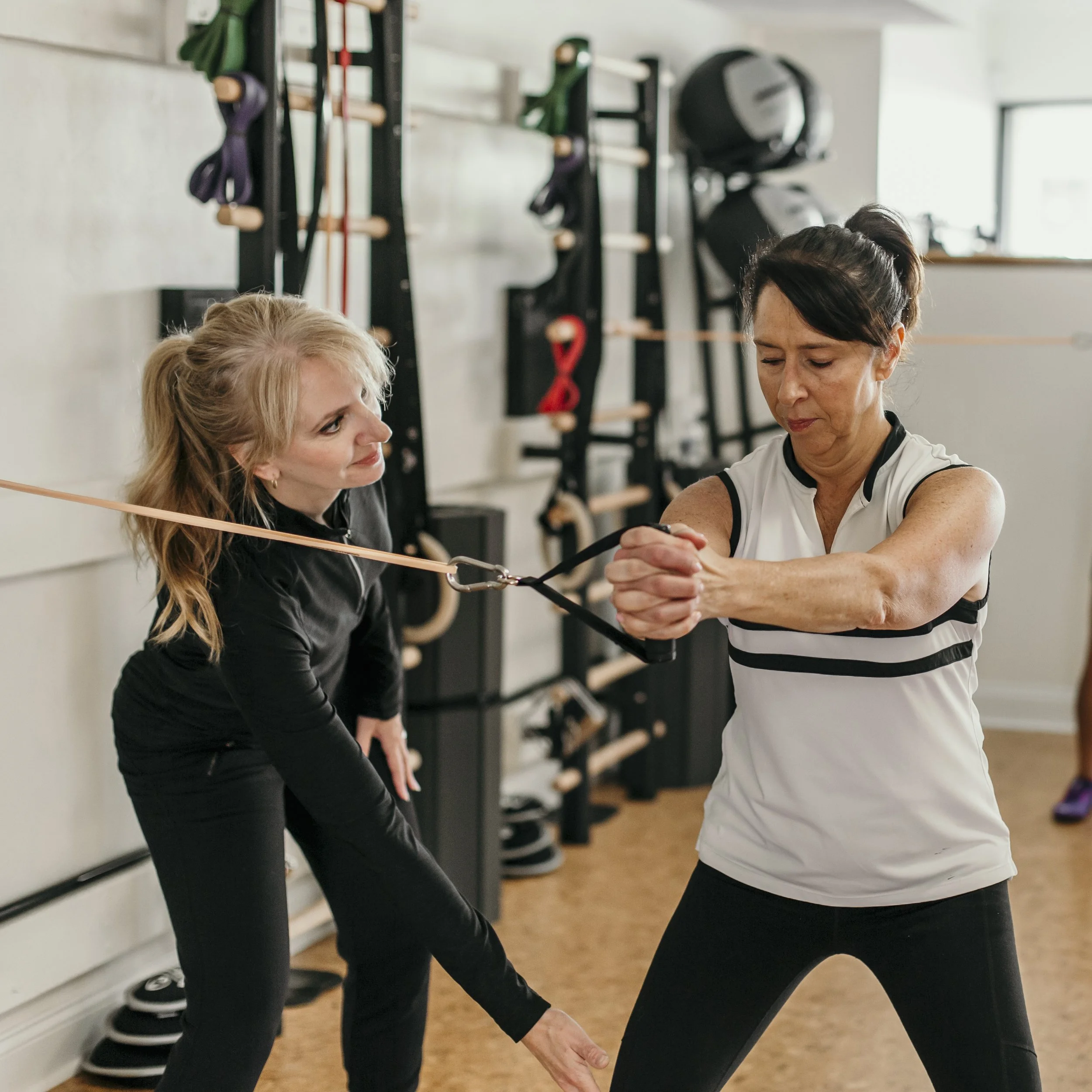
Another option is small group personal training, sometimes called semi-private personal training. The exact definition can vary from one studio to another, but I generally think of it as one personal trainer working with somewhere between two and ten clients at a time.
When it is done well, small group personal training can be a very effective option. But there is an important distinction. Small group personal training should not simply be a one-size-fits-all exercise class with a different name.
There may be several women exercising at the same time, but the training should still feel personal. Before someone begins, I believe she should have an individual assessment. The trainer should take the time to learn about her health history, previous exercise experience, past or current injuries, surgeries, medications, and anything else that may affect how she exercises.
The trainer should also get a good understanding of where she is starting with her flexibility, balance, and strength. That information is what allows the trainer to make adjustments once she begins training with the group.
There are several advantages to this type of personal training. First, it can provide much of the personal guidance of one-on-one training while costing considerably less. In many places, small group personal training may cost somewhere around $25 to $35 per session.
There is also a community aspect that many women really enjoy. Instead of exercising alone with a trainer, someone is around a small number of other people who are working toward their own goals too. Small group training can also provide more scheduling options. With one-on-one training, someone may have a specific appointment with her trainer each week. In a small group program, there may be several different session times available.
But there are disadvantages too. One of the biggest is that not every “small group” program is truly personal. If one coach is responsible for too many people, it becomes extremely difficult to give everyone the attention they deserve.
My small team and I have spent countless hours over the years testing different group sizes. We’ve found that once you go beyond about 10 clients in the studio, it becomes very difficult to give each woman the personal attention we believe she should receive.
So one of the first questions I would ask is:
How many clients can one coach work with during a session?
The second question is:
What ages are the people in the program?
This matters more than many women realize. If the answer is “all ages,” there could be someone in her 20s exercising beside someone in her 70s. There is nothing necessarily wrong with that, but the goals, concerns, abilities, and stage of life can be very different.
I’ve had many women tell me that they felt out of place in environments like this. That is one of the reasons I eventually chose to specialize exclusively in personal training for women over 50.
It may sound like a very narrow specialty, but our clients regularly tell us that being around women like themselves is one of the things they value most.
Over the years, we’ve offered both one-on-one and small group personal training. Both can work very well when the program is properly designed.
But for many women, I believe small group personal training offers an excellent middle ground. It can still provide personal attention and coaching without the much higher price that usually comes with one-on-one training.
The Cost of Not Exercising After 60
There is one other cost that I think deserves to be part of this conversation: the cost of doing nothing.
One of my clients once explained that she had made the decision to invest in herself because she wanted the strength she needed to continue living the life she wanted. She viewed her body as an asset worth investing in.
At first, that may sound like a strange way to think about exercise. But the more you think about it, the more sense it makes. Most of us understand the importance of taking care of things we want to last.
We invest in our homes. We replace the roof when it needs replaced, maintain the heating and air conditioning, and make repairs instead of simply allowing the house to deteriorate. We do the same thing with our vehicles. We change the oil, replace the brakes, buy new tires, and take care of problems before they become bigger problems.
We understand that maintaining these things costs money. But neglecting them costs money too.
Our bodies are not exactly the same as a house or a vehicle, of course, but I think there is an important lesson there. There can be a cost to not exercising after 60. Being weak, stiff, out of shape, or struggling with balance isn’t necessarily free.
Sometimes there is a financial cost. Injuries, falls, medical appointments, and physical therapy certainly aren’t free. But there can also be another kind of cost.
For many women, there is a cost when traveling becomes harder because walking through an airport feels too difficult. There is a cost when playing with grandchildren becomes harder because getting down on the floor and back up again is no longer easy. There can also be a cost when gardening, golf, pickleball, carrying luggage, climbing stairs, or other activities someone enjoys start becoming harder because the body is simply becoming too deconditioned.
You can’t easily put a dollar amount on those things, and that is why I think the question of personal training cost deserves a little perspective.
Yes, personal training costs money. One-on-one personal training costs money. Small group personal training costs money. A gym membership costs money. But being out of shape can have a cost too.
Over the years, I’ve noticed that many of the women who do especially well seem to share a similar mindset. They see taking care of their body as something worth investing in.
That doesn’t mean everyone needs to hire a personal trainer. It means that whether someone chooses personal training, exercises on her own, or finds another approach that works for her, her strength and physical ability are worth taking care of, just like the other things in life that people hope will continue working well for many years to come.
A Better Way to Think About the Cost
Personal training is an investment, but so is taking care of your strength, flexibility, and ability to keep doing the things you enjoy.
If you’re considering personal training and want to see what the right fit might look like, A50 Personal Training offers a free one-week personal training trial for South Hills women over 50. It gives you a chance to experience the coaching, see how the sessions work, and decide whether it feels right for you.
And if you’re still deciding where exercise fits into your life, you may also find my article, Why Walking Alone Isn’t Enough for Women Over 60, helpful.
ABOUT THE AUTHOR
Jason Zawodniak is the Co-founder of A50 Personal Training, the first personal training studio in the South Hills built exclusively to serve women over 50. With nearly two decades of experience in the fitness industry, Jason noticed early in his career that women over 50 were consistently underserved — showing up to gyms where they felt out of place, unsure of what to do, and afraid of getting hurt. After hearing those same stories from his own clients year after year, he made a decision: in 2017, he opened A50 to create the program he knew this demographic deserved. Today, Jason specializes in helping women over 50 build the strength and flexibility they need to stay active, prevent injury, and keep up with the people and activities they love most.